OPHIDIAN LIFE
To live a life according to the Serpent
Ophidism is not imprisoned in the walls of our Institution, not does the Ophidian identity depend upond membership in the Ophidian Synodus.
Being an Ophidian means, first and foremost, to profess a faith and to order your life according to it.
A true Ophidian religious life is, therefore, lived not only within the Synodus, but in the ordinary world: at your home, at work, in your personal relationships, in solitude, in prayer.
An Ophidian may fully live as a lay without ever seeking admission in the Synodus.
The Synodus is in charge of preserving, teaching and serving the Ophidian tradition.
LIVING THE FAITH
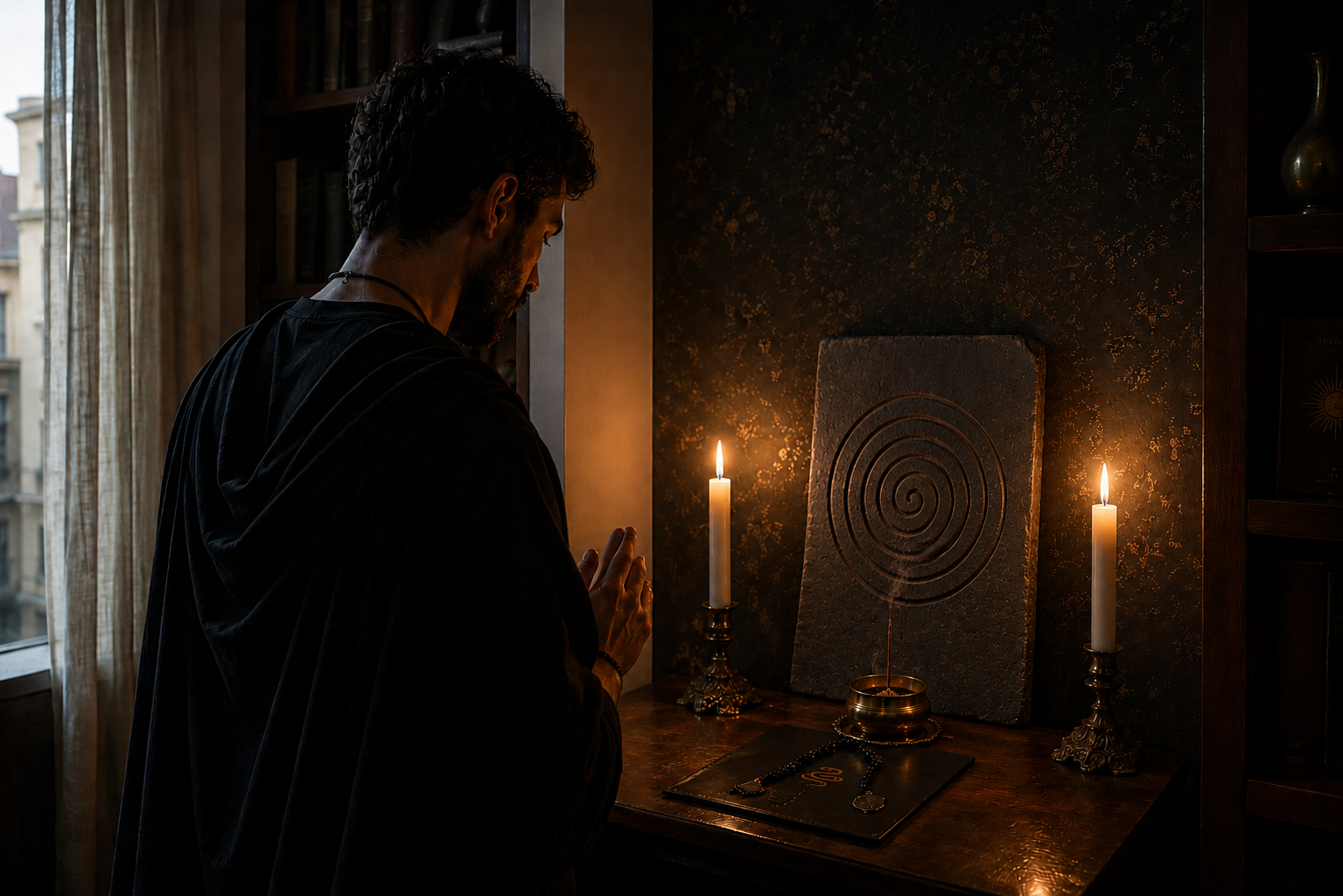
Living Ophidism does not imply an affiliation with our Institution. No formal affiliation is, in fact, required in order to profess our Faith or to incorporate its religious principles into one’s life. The difference between a lay Ophidian and a member of the Synodus is not a difference of faith, but of vocation and responsibility. Where the lay is called to live the faith, the Synodus member accepts, in addition, the responsibility to serve, preserve and transmit the Faith. For many Ophidians, lay religious life may therefore remain their proper and complete condition throughout life.
FAITH
Being an Ophidian means applying the principles of Ophidism on a daily basis. This, in turn, means not withdrawing from the world, but living, accepting and understanding the Polemos that shapes things as they are. Being an Ophidian, therefore, does not mean simply to stick to moments explicitly devoted to worship, but also to apply the “Ophidian gaze” to every aspect of our daily life: from work to family, from friendships to social events, we can look with an Ophidian attention and follow the Ophidian ethics to truly, fully and unconditionally live in communion with the Serpent.
DAILY LIFE
A faith that produces no consequence in life risks becoming merely an intellectual preference. Ophidian discipline, therefore, concerns not only the system of beliefs, but also how these beliefs are lived and practised. Every Ophidian is called to cultivate self-command, responsibility and deliberate action; to accept change rather than seeking refuge in stability; and to pursue the virtue of moderation. However, spiritual discipline does not equal prohibitions. Life is lived differently by each individual: Ophidian discipline is lived within the concrete responsibilities of each.
DISCIPLINE
PRAYER, DEVOTION AND OBSERVANCES
Naturally, Ophidian faith does not only apply to ethical discipline and to the gaze through which we look at the World. It also finds regular expressions in prayer, devotions and sacred observances. Through the Dies Serpentis and the cycle of annual festivals and holidays, the Ophidian gives a true religious form to the passage of time and actively participates in a sacred rhythm shared with all the other Ophidians around the World.
To celebrate these Festivities, for a lay Ophidian, does not mean reproducing the ceremonial life of the Synodus. The home is not a temple, nor is the Ophidian expected to imitate the duties of our canonised members. Rather, prayer, small celebrations and minor observances are appropriate forms at the disposal of the lay Ophidian to truly live, experience and feel the meaning of the Festivity and the endless coiling of the Serpent.
The liturgical page provides further guidance concerning Ophidian worship, the Dies Serpentis and the observance of major Festivities. Additional information in this regard is included in the Synodus’s official liturgical publication “De Orationibus Serpentis”.
BEYOND LAY LIFE
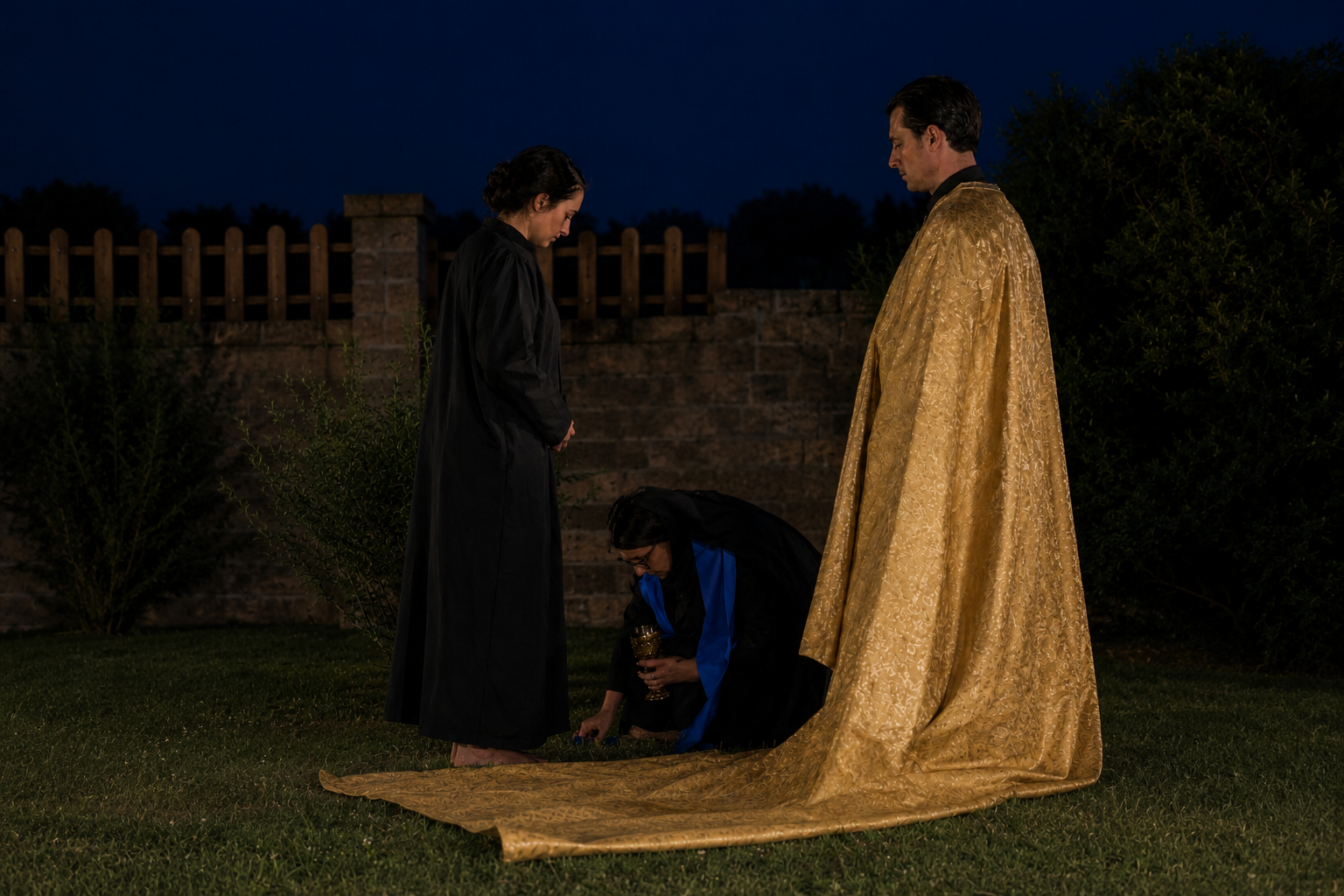
A VOCATION TO COMMUNITY
For most Ophidians, faith is lived within the ordinary course of life through prayer, observance, discipline and the continual application of the Ophidian principles. But for someone else, this just does not feel enough.
These people are those who find themselves desiring not only to live according to the Ophidian tradition, but to take responsibility for its future: to preserve and expand the doctrine, to celebrate its liturgies, to deepen its understanding and transmit knowledge to those who will come after them.
It is for these people that the Synodus exists as a living community, as a religious body aimed at building and improving the Ophidian community, preserving its doctrine, defending the tradition and exploring the mysteries of the Divine.
Membership in the Synodus is, therefore, neither a requirement of Ophidian faith nor an honour automatically sought by each Ophidian. It is the acceptance of responsibility toward Ophidism and the community, but most of all it is the will to live fully and with no exceptions a path of transformation and dedication.
The journey to become a consecrated member of the Synodus is not easy, nor short. Canonisation is not the starting point of your spiritual journey in the Synodus, but its accomplishment.
If you have recognised a true vocation for Ophidism and you are sure about the application to our Institution, you will start your preparation for the Canonisation, received after the studies in the Didaskàlia, just before becoming a liturgist.
In Ophidian tradition, Canonisation is not the posthumous recognition of sanctity, but the ritual, liturgical and sacred act through which the life of an Ophidian is endlessly dedicated to the Serpent.
For this reason, Canonisation is an unbreakable vow, and if a confrère decides to leave the Synodus after having received Canonisation, they will never be admitted again if they change their mind. Receiving Canonisation means becoming responsible for something beyond your own religious life. This is why every member of the Synodus undertakes a specific education and places their abilities at the aid of the Ophidian community.
LIVING THE CANONISATION
IS THE SYNODUS CALLING YOU?
The Synodus does not seek every Ophidian.
It seeks those whose life is bound to the Serpent.
Those drawn toward its consecrated life should be prepared for study, discipline, collaboration and responsibility. Intellectual interest alone is insufficient; neither enthusiasm nor admiration for the Synodus constitutes a spiral vocation.
But where conviction is accompanied by constancy, and faith by the desire to assume responsibility, the possibility of Synodal service deserves to be discerned.
You need not enter the Synodus to be an Ophidian.
But the Synodus cannot endure unless some Ophidians choose to build its community.