The  Ierà is not merely a service; it is the fundamental work of Ophidism. It is the ritual through which the Ophidian actively harmonizes with the eternal rhythm of the cosmos, tracing the path of the Serpent: the ultimate symbol of Existence.

The liturgy is a living spiral, guiding the participant from the absolute stillness of the Nihil to the perpetual motion of our reality.

The Ierà (Greek for 'sacred things') is not only our principal liturgy, but a true spiritual dialogue in which the Celebrant and participants unveil, one by one, the mysteries of Creation, engaging in the highest form of communication with the Divine. The metaphor of the Serpent's coils, which slowly and eternally spiral outwards, unveiling Reality, is therefore the highest form of analysis of Being, the primary instrument in the hands of the Ophidian to understand, and finally perceive, the Divine.

Structure of the Ophidian Liturgy

  • The Ierà begins with the Nihil, the state of metaphysical Void that precedes every creative act. In this phase, the phenomenal world is suspended: there is no sound of êchos because there is no life-vibration yet; there is neither space nor time, but only the pure dimension sine tempore. At the heart of this darkness, only the Pharmakon subsists, the primal substance that is simultaneously poison and cure.

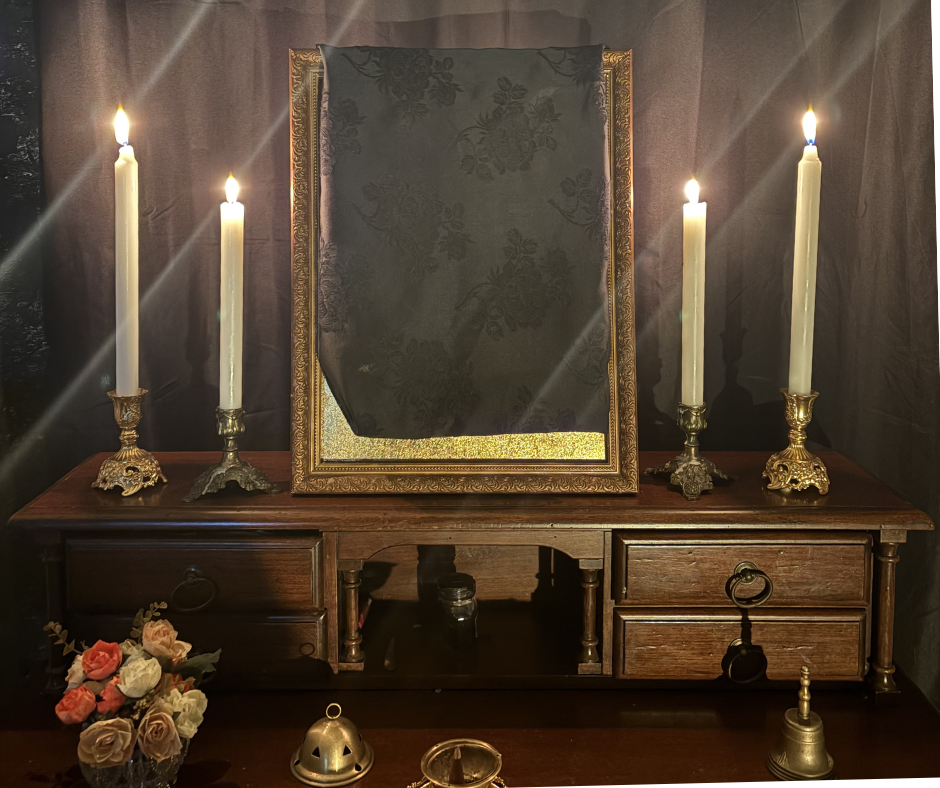
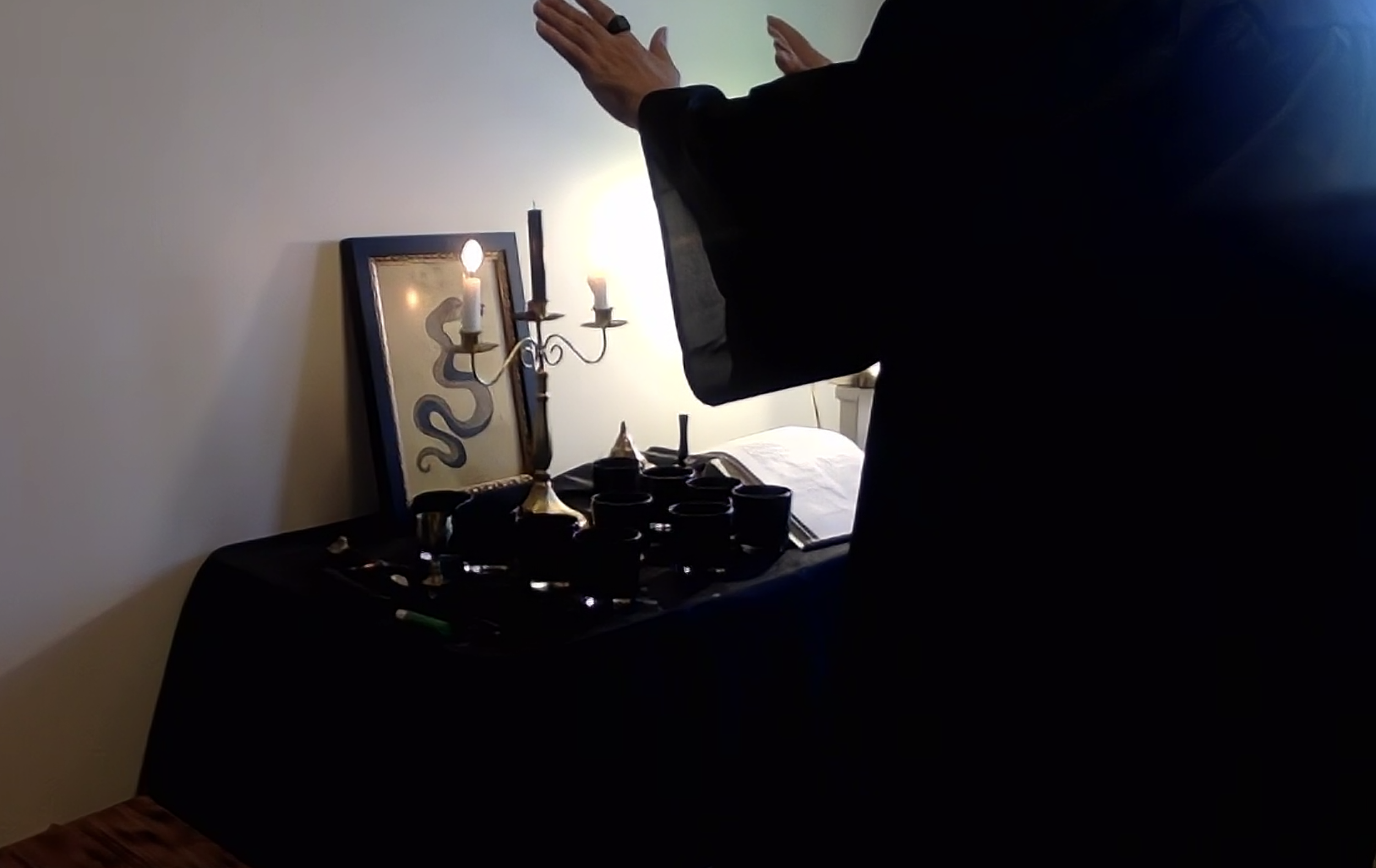
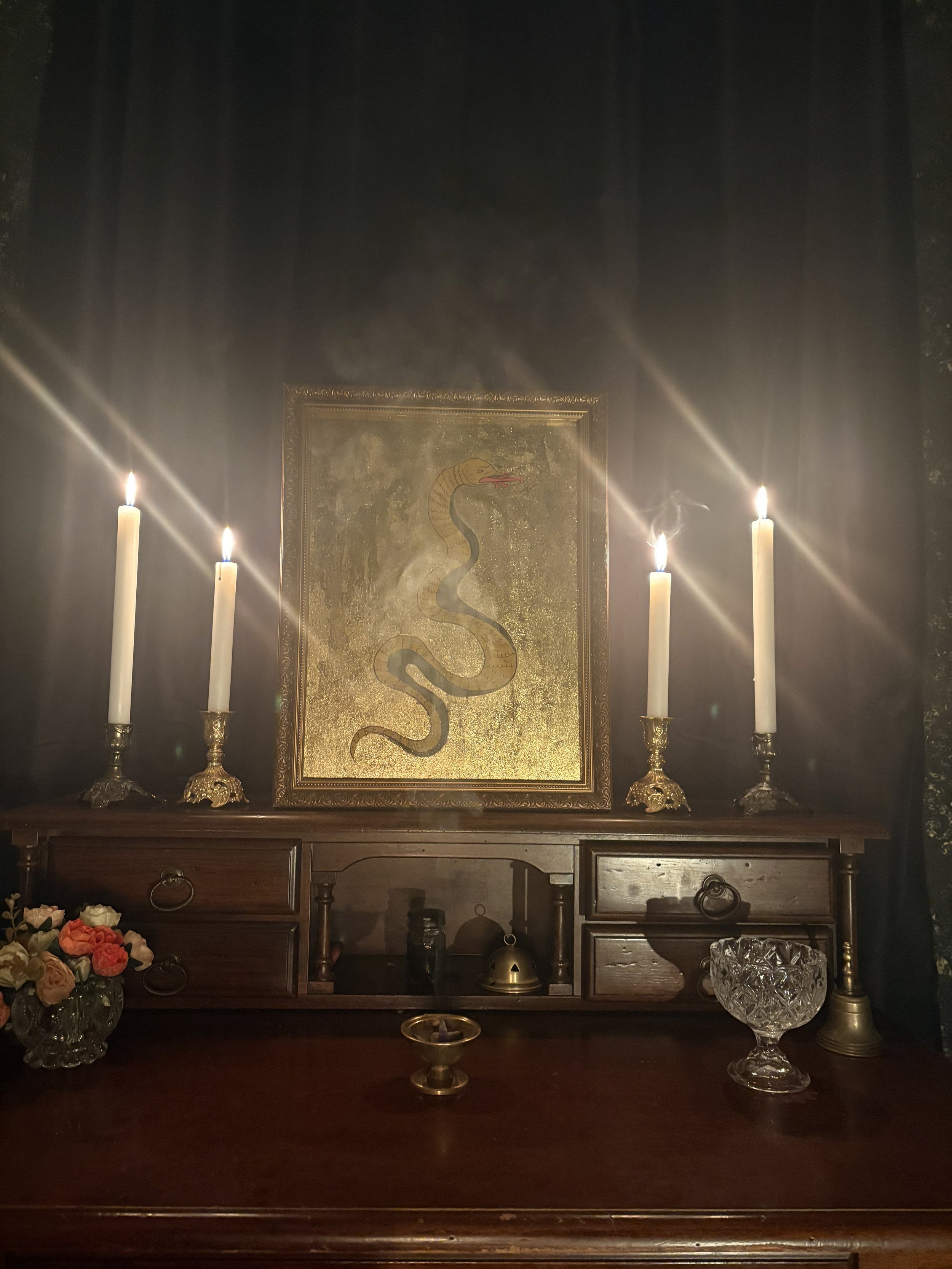
    The altar reflects this absence: the ophidian icon is shrouded in black cloth, symbolizing the Unknowable that has not yet been revealed. The only lights are two or four solitary candles, witnesses to an existence independent of creation.

    The practitioner, immersed in this sacred silence, is invited to an intellectual kenosis, shedding all worldly structures to prepare for the encounter with the Absolute.

  • With the transition to the Conscitum, the liturgy celebrates the traumatic and glorious instant of self-givvenness. It is the moment when the Pharmakon, overflowing with its own infinite essence, performs the supreme act of self-awareness and emerges as God.

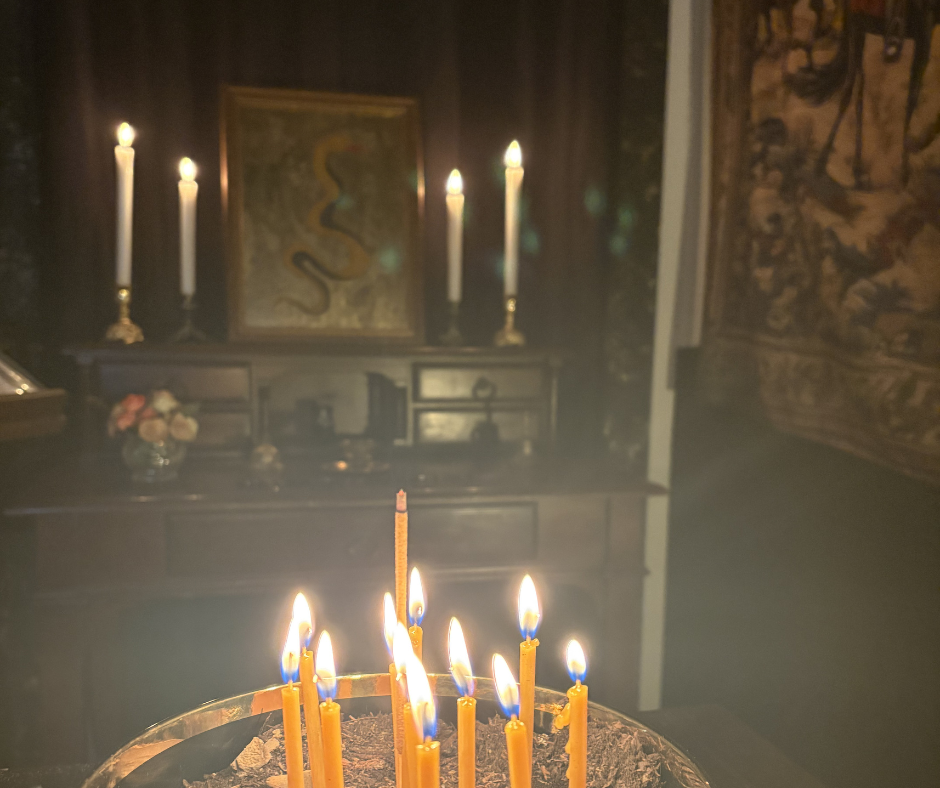
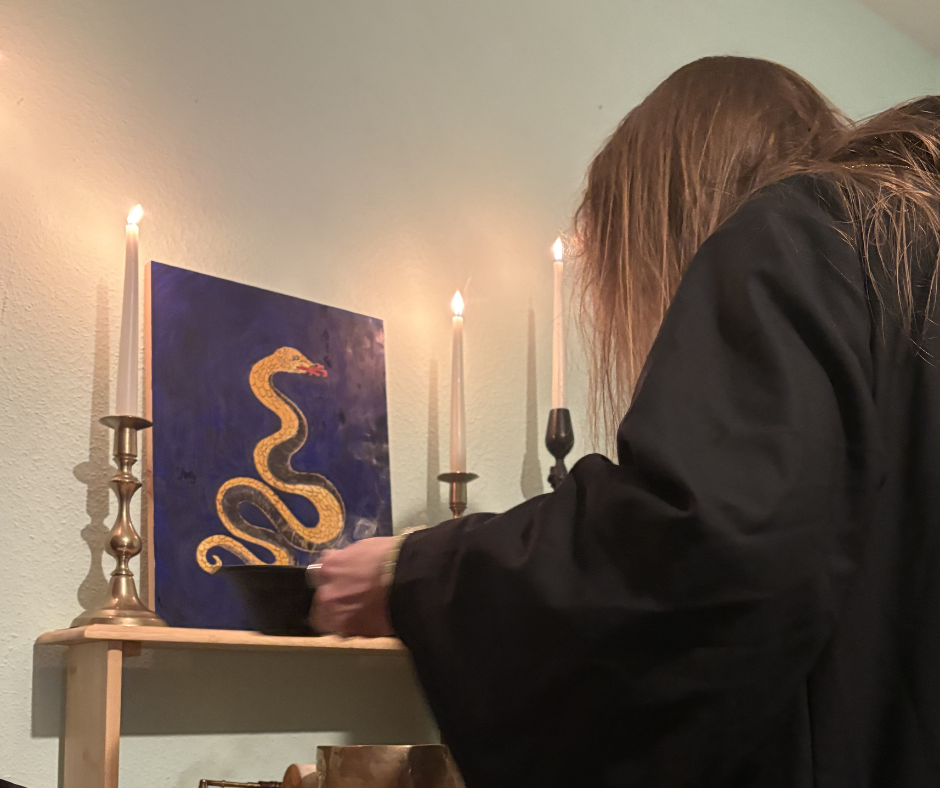
    This transition is not merely theoretical but becomes a perceptible event through the unveiling of the icon: the black shroud is removed, and the Serpent appears upon the altar in all its symbolic power. This act signifies the movement from the potency of the Pharmakon to the act of God, from the possibility of existence to the reality of the Being.

    The Conscitum is, therefore, the epiphany of intellectual being piercing the darkness of Nihil, an awakening that the Synodus solemnly celebrates during Dies Serpentis as the foundation of its freedom and ontological identity.

  • The third stage of the Ierà is the Conflictus, the phase in which the liturgical narrative introduces the primordial force of Polemos.

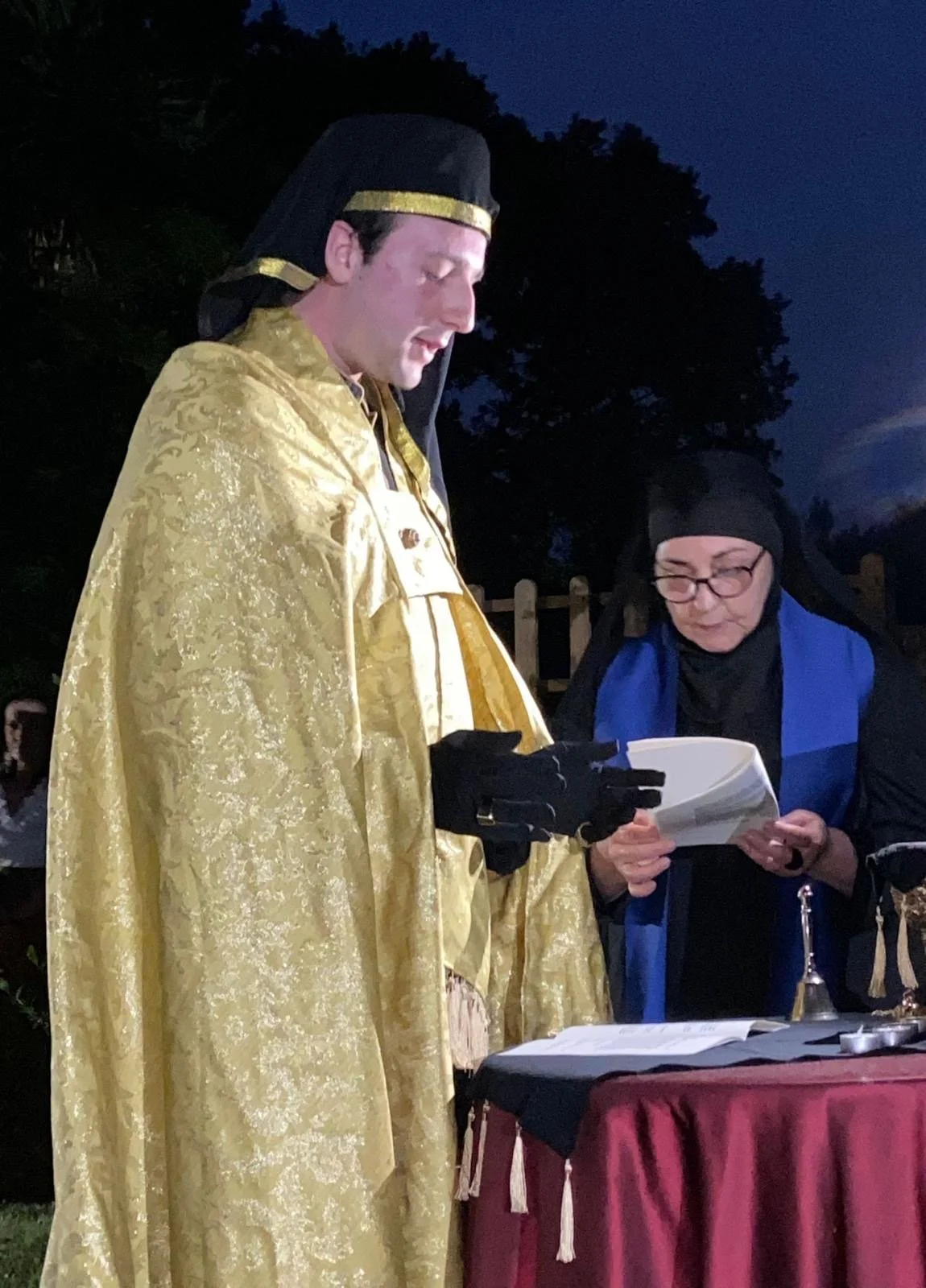
    While the Conscitum was the epiphany of Being, the Conflictus is the irruption of becoming. This transition is marked by the introduction of sound: for the first time in the celebration, the êchos vibrates within the sacred space. Eleven tolls measure the time, representing the tension that precedes form. As the vibration fades, the ritual proclamation “Polemos est ictus qui non destruit, fractura que metrum generat” affirms the nature of reality: strife is not destruction, but the very rhythm of existence.

    In this phase, the practitioner contemplates the eternal contradiction of Creation, the perennial opposition of contraries that sustains the universe. Just as a river remains a river only by virtue of its constant flow, so everything is what it is only through the presence of Polemos. Stasis is death; conflict is the vital vibration that makes manifestation possible.

  • The fourth phase, the Coniunctio, marks the solemn entrance of the two cosmic archetypes: Neikos (Strife/Disitengration) and Philia (Love/Aggregation). This encounter is made possible solely through the agency of Polemos, which serves as the necessary condition for the relationship between these polarities.

    During this transition, the rite reveals that Creation is not a place of judgment, but of pure manifestation: aggregation and disintegration are forces equally essential to the life of the cosmos. The opposition of contraries is embodied in the Antiphon, where the Assembly, divided into two groups, intertwines their voices in an alternating call to Neikos and Philia.

    Through this vocal tension, the practitioner understands that "good" and "evil" are mere human projections; within the heart of the Pharmakon, every thinkable, knowable, or perceivable element finds its legitimate space. It is the celebration of totality, where the union of contraries becomes the key to penetrating the deepest mysteries of Creation.

  • The fifth phase of the Ierà corresponds is the Reverbero, the moment when becoming finds stillness within self-consciousness. As nothing exists outside the Divine, God can do nothing more than contemplate Himself, reflecting upon His own infinite essence. T

    his mystery is made visible through the element of water: the Liturgist uses the water contained within the êchos as a liquid mirror, meditating in a silence that bridges time and eternity. The invocation “Magister, qui sicut speculum aquae in tuam infinitatem spectavisti...” celebrates the God who recognizes His own omnipotence by gazing into His own abyss.

    Here lies the first true point of conjunction between the human and the divine: man, by mirroring himself, imitates the primordial act of the deity. In this mutual recognition, the practitioner is no longer a mere spectator but manifests as a conscious reflection of the Absolute.

  • Following the stillness of reflection, the Ierà reaches its zenith: the Revelatio, the epitome of the entire celebration. In this sacred moment, abstraction becomes presence, and darkness is decisively overcome.

    The entire community actively participates in the rite, alternating in the recitation of solemn invocations that accompany the lighting of the eleven candles positioned at the center of the Omphalos. Each candle represents a mystery of Creation: as the Liturgist proclaims each mystery, the assembly responds with the corresponding invocation.

    This choral dialogue is not a mere recitation but an act of ontological unfolding: through the vibration of the voice and the light of the fire, the whole of Creation is opened to human understanding. The mystery is no longer a fearsome abyss, but a truth that offers itself to the gaze of the practitioner.

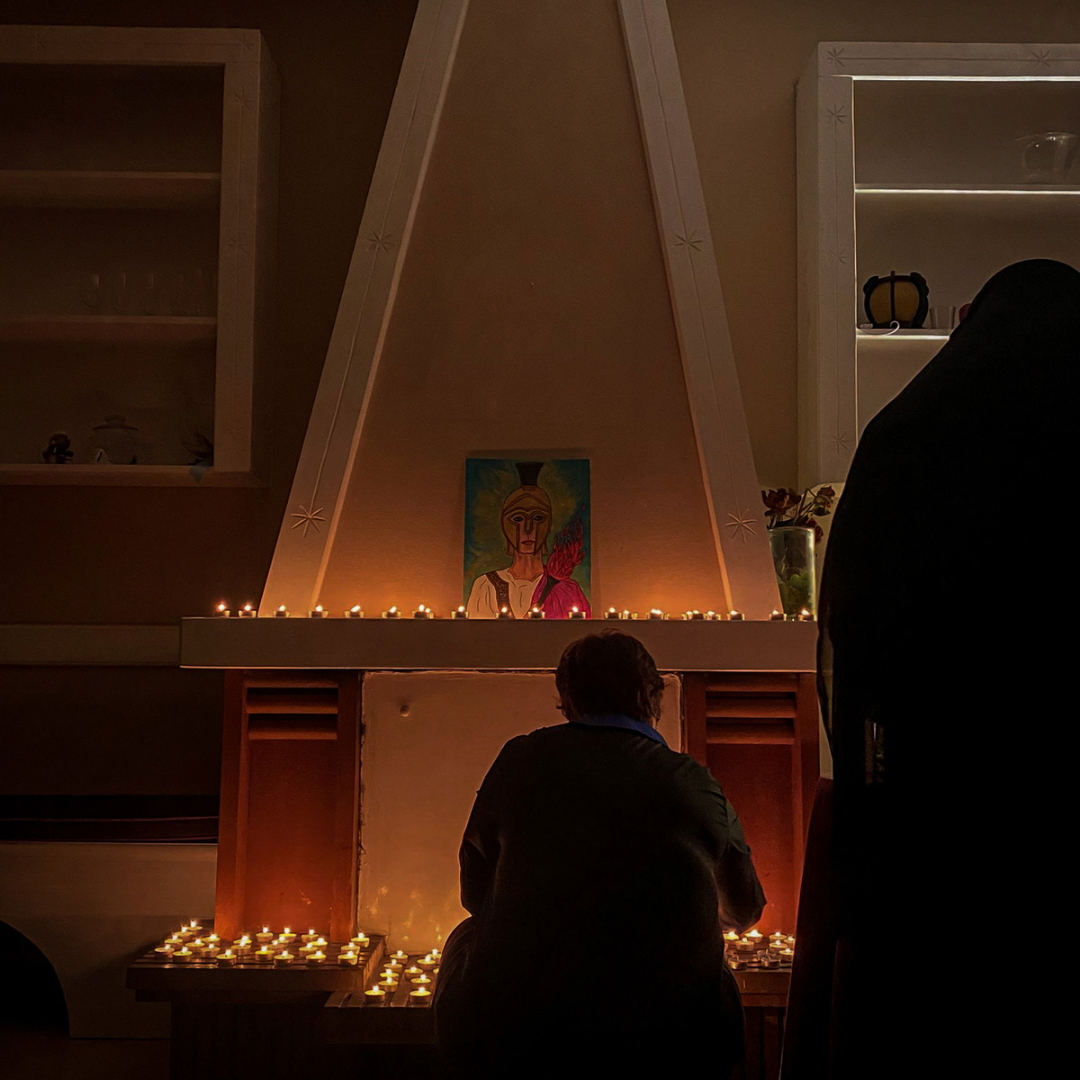
  • If the Revelatio signifies the completion of Creation within the cosmos, the Aspersio marks the entrance of humanity into the equation of life. In this first section of the second half, each participant approaches the Omphalos to anoint their head with the smoke of the incense: it is the solemn act by which the human being establishes a unique relationship with the Divine, declaring themselves a conscious manifestation of the Pharmakon.

    Unlike traditional sacraments, the Aspersio  involves no change of substance but instead consecrates a shared consciousness. It is a radically inclusive act, open to anyone who wishes to participate.

    In an explicit rejection of spiritual hierarchy, it is not the Liturgist who administers the rite; rather, each participant anoints themselves, reclaiming their own intellectual sovereignty. With this gesture, the veil between the human and the non-human is permanently lifted: the relationship is forged, the journey is complete.

  • The preservation of the unique bond between the human and the divine finds its necessary condition in the Devotio, the moment when pure religious sensitivity emerges within the human heart. Here, the sorrow of existence, the radical loneliness of our condition, and the eternal questions humanity has cast into the abyss for centuries are all synthesized.

    This is the peak of Ophidian pathos: man calls out, but God does not answer. God remains silent. This silence is not a void, but the very confirmation of His "Otherness": a silence that does not negate the relationship, but elevates it to a form of pure devotion, grounded not in reassurance, but in the awareness of one’s own heroic solitude within the Pharmakon.

  • After recognizing one’s own heroic solitude before the divine in Devotio, the Ierà reaches the definitive stage of hieratic becoming: Agàpe. In this phase, man no longer limits himself to recognizing the Wholly Other (God) but finally recognizes his fellow man. Ophidian Agàpe is not a fleeting sentiment, but a principle of tolerance and selfless aid that serves as the supreme social bond. It is the rational act of the individual who, desiring their own self-preservation, understands that such preservation necessarily flows through the care of others. Within the rite, this truth is embodied by a symbolic embrace that the Liturgist shares with a member of the community—a powerful gesture that transforms philosophical theory into a living connection. Agàpe is thus the highest behavior to which a human being can aspire, the point where the knowledge of the Pharmakon is translated into universal and selfless love.

  • The Themelia represents the zenith of Ratio, the highest faculty of human potential. While traditional liturgies impose the homily, a unidirectional preaching that assumes clerical superiority over the laity, Ophidism institutionalizes philosophical debate as a sacred act. In this phase, the Liturgist does not preach ex cathedra but acts as a maieutic facilitator: they propose a theme and offer analytical insights for the entire community to discuss, refute, or enrich. The Themelia is an exercise in radical equality where no pulpits exist: from the novice to the Archegete, from the believer to the secular visitor, every participant is a creator of knowledge in constant evolution. Here, doctrine itself is not dogma but a heuristic hypothesis awaiting validation or replacement by the universal power of Reason.

  • The Cooptatio represents the final moment of the Ierà and the life cycle: the reunification of man with the primordial Void. 

    In this phase, silence reigns once more, broken only by the proclamation: “Tempus est vivendi, tempus moriendi.” Death, stripped of any threat of eternal punishment, is embraced as a natural element of existence. 

    For Ophidism, the only true sin is inauthenticity, failing to have been oneself. For those who have unfolded their full potential, death is a serene return to the state of non-being that preceded life. The celebration thus concludes where it began, within the silent embrace of the Pharmakon.