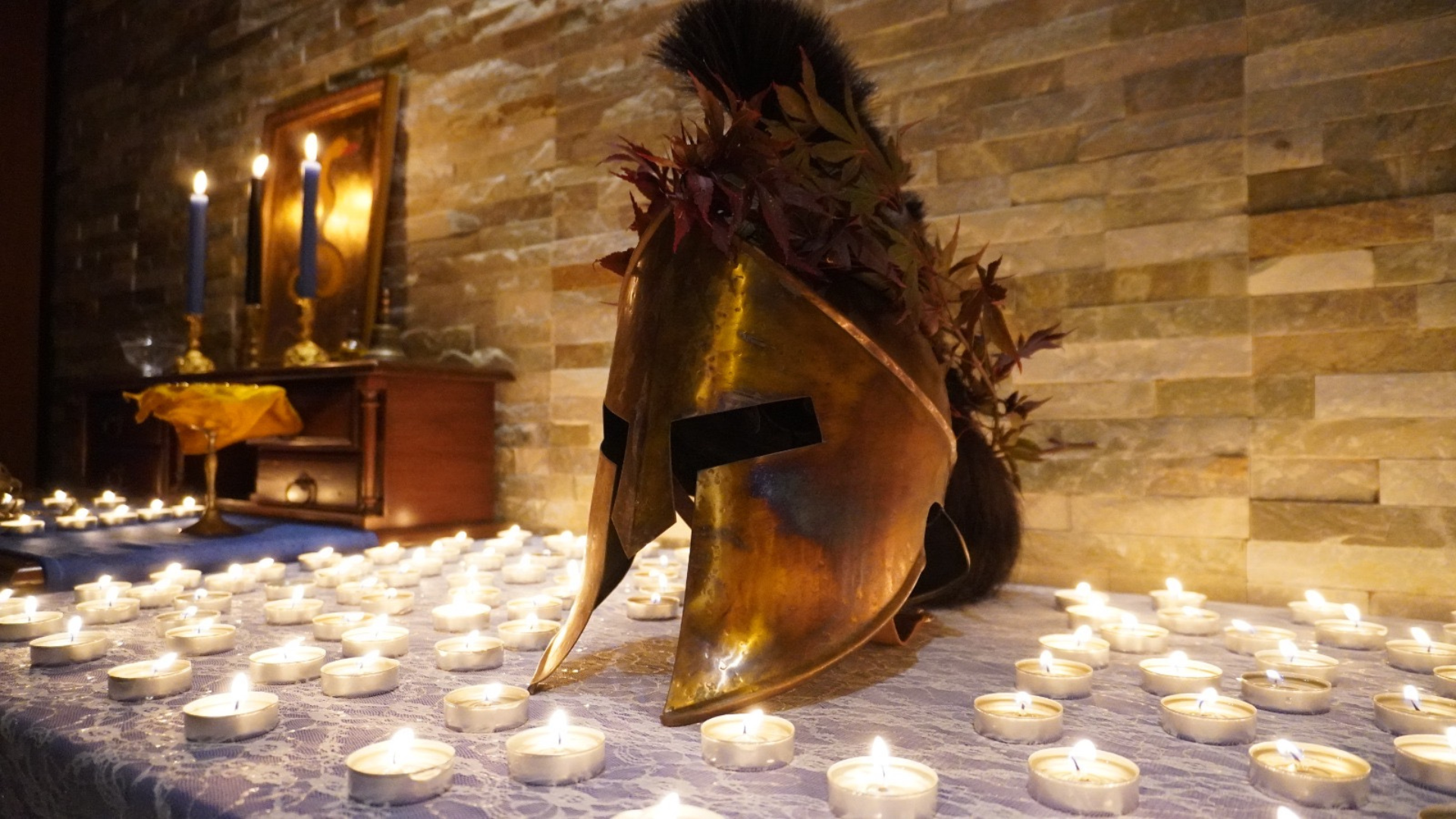
FESTIVALS AND HOLIDAYS
The Liturgical Rhythm of the Ophidian Year
For an Ophidian, the time is not linear, nor circular, but spiralic. Our liturgical calendar fully reflects this vision.
The Ophidian Festivities do not commemorate historical events; they mark the astronomical and spiritual points at which the Divine reveals Its movement. Each of these celebrations is a sacred moment during which the Ophidian can meet a certain manifestation of the Divine, embodied in our doctrine by the archetypes of Polemos, Neikos and Philia.
If the Serpent truly reveals a God who acts through metamorphosis, then the liturgical year is the arena in which this metamorphosis becomes audible and visible.
The Ophidian sacred time is divided in daily, weekly and annual. Where the daily sacred time is that of the Euché (prayer), the weekly and annual sacred times are what, quite simply, we can call “Festivities”.
Dies Serpentis
The Weekly Celebration of the Serpent
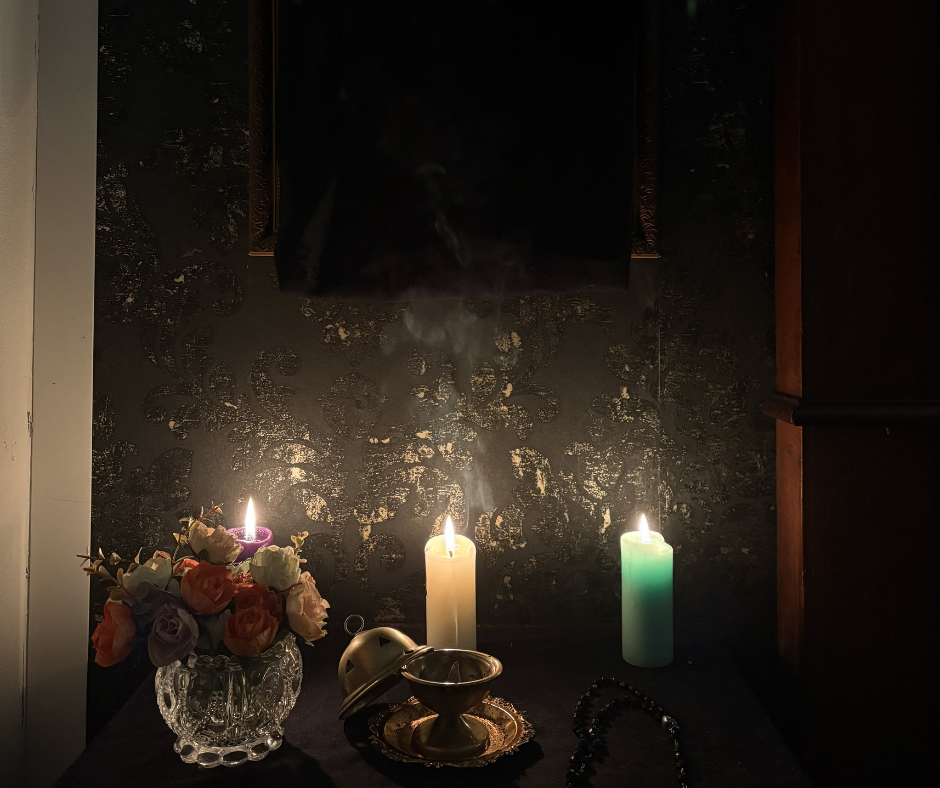
The Dies Serpentis (Day of the Serpent) is the sacred weekly occurrence for the Ophidian community.
This day is not simply an act of devotion to the Divine, but a joyful time of sharing for what Ophidism names as self-givenness, the self-unfolding of God.
The celebration is addressed to all Ophidians, including consecrated members of the Synodus, lay people, and novices, and takes place every Saturday morning, before 11:11 AM.
It is an hour dedicated to honouring the great mystery that is divine manifestation, beginning with profound preparations on the preceding Friday evening and culminating in the proper ritual during Saturday morning.
ANNUAL CELEBRATIONS
Major Festivities
-
The Udenerie are the feasts of the Pharmakon and constitute the most solemn moment of the Ophidian liturgical year, marking its beginning and its end. They are not celebrated through a ritual action or a defined liturgy, but through a long silence, during which this sacred time is lived through the full absence of the spoken word alone. For this reason, the Udenerie are observed by twelve consecutive hours of silence, from 11:00 AM to 11:00 PM. This time of silence is not symbolic in a metaphorical sense, but structural: it establishes a complete arc of real presence, during which no liturgical performance is enacted, and no doctrinal content is transmitted.
This Feast is, therefore, a time of ontological exposure, in which the Pharmakon is neither invoked nor represented, but lived as the ground of being, dissolution, and renewal. They do not mark, as all the other Ophidian Feasts do, the flow of time, but they arrest it, suspending the ordinary rhythm,placing the community within a condition of radical and real attention. No explanation is offered, no interpretation is required, and no interior exercise is given. What is asked is just presence and attention.
-
The Ordo Invocationis is celebrated annually between the Udenerie and the Ofisie, serving as a propedeutic invocation for the manifestation of the Serpent, which occurs during the month of December. It is constituted of eleven invocations placed between the 14th of November and the 14th of December, one every three days. This series of invocations is aimed at invoking different aspects of the Divine, calling forth the Serpent as its only possible unfolding, as rightly shown by the Feast of the Ofisie.
The Order of Invocations belongs, as a liturgical practice, to the Synodus and to its Liturgists only, and for this reason cannot be celebrated by lay Ophidians or by any community without an Ophidian Liturgist as their guide. There is no prescription to follow, nor any practice to develop during these days, if not the active attendance at the communal invocations organised by the Synodus itself.
-
The Ofisie, known as Fest of the Serpent, occur every year from the 20th to the 22nd of December, and they are considered the epitome of the Ophidian liturgical year. These are the days in which the sun passes through the winter solstice and during which the night lasts longer than the day. Traditionally, these days represent a time of despair, worry and danger. But equally, these are also the days of rebirth, renewal and immortality.
As said, the Ofisie follow the Ordo Invocationis, but they are not a product of it. What occurs during this Festivity is not the result of a ritual practice, nor the product of an invocation, but rather the sudden and immediate interruption of the sacred time. Just as the first sunray dispels the darkness at dawn, so the Ofisie break the circular unfolding of the Ophidian sacred time, to create a space where words, gesture, sounds and images are suspended within the eternal coils of the Serpent.
Theologically, the Ofisie do not look at the Serpent as a symbol or as an allegory of God, but as the one, only and true embodiment of the Divinity, as Its manifestation in our physical Universe, as a principle of transformation, unity and return to the Absolute. The purpose of this Feast is, therefore, not describing the Serpent, nor explaining Its nature, but acknowledging that only through Its shape and Its coils one can look within God’s eye.
-
The Disoterie, the festivities of Philia, do not celebrate love intended as emotion, affection, or moral sentiment. They affirm Philia as a cosmic and ontological principle: the force by which beings are drawn together, unified, and through which multiplicity does not collapse into dispersion. What is celebrated, therefore, is not love as a feeling that connects two people, but love as a real and tangible structure of existence.
Within the liturgical year, the Disoterie articulate a mode of sacredness distinct from both silence and manifestation.
These are, in fact, days of stabilisation, in which what has been given is allowed to remain, connect, and endure.
The disposition required during the Disoterie is a measured openness, just as the ground is prepared to receive the seeds.
Theologically, the Disoterie stand in direct relationship with the Feasts dedicated to Neikos, celebrated in September. These two Festivities, together, allow us to understand that change and transformation are not seen as a product of either aggregation or destruction, but rather as the result of their sum, of their union.
These two Feasts not only follow the natural cycle of nature, but also create a real Ophidian structure of reality, allowing a deeper understanding of things.
The Disoterie celebrates the union of the community, the blossoming of life in all its aspects, and the strengthening of all the human bonds that form our society.
-
The Faidrerie, occurring annually from 20 to 22 June, are the major Feast of knowledge and illumination. These days celebrate the light of understanding and wisdom, through which confusion is dispelled and ignorance rejected.
The Faidrerie do not exalt mere information, learning, or the accumulation of notions, but rather they recognise knowledge as spiritual illumination. What the Faidrerie celebrate is, therefore, the act through which what is obscure becomes ordered, what is dispersed becomes legible, and what is latent is brought into conscious manifestation. For this reason, what the Ophidians praise during these days is not the possession of truth, but a new clarity in their own orientation towards knowledge, obtained through discussion, inquiry and research. Within the liturgical year, the Faidrerie mark a time of intellectual manifestation.
Here, what becomes manifest is understanding itself, not as a doctrine imposed from above, but as a direction that leads us towards the object of our own research. Considering the symbology of this Festivity, one must not be surprised if word, reading, dialogue, discussion and attentive listening are so important during these sacred days.
Theologically, the Faidrerie affirm that transcendence is not reached through obscurity or negation, but through intelligibility and philosophical inquiry. However, illumination does not abolish mystery; it renders it inhabitable without confusion. Knowledge, in this sense, is the legitimate mode of access to the sacred. What remains after these Feasts is not a residue of exaltation, but a clarified horizon, within which thought, action, and contemplation may unfold without confusion.
-
The Tanasimee, observed annually from 20 to 22 September, are the major celebrations of destruction and transformation within the Ophidian liturgical year. They mark a time in which dissolution is acknowledged as a necessary and active principle within Creation.
For this reason, the Tanasimee are not linked to mortality or death, but celebrate renewal and transformation as necessary processes of existence. They look at Neikos as a simple force of separation, not evil, nor good, just existing. What is celebrated is not annihilation, but the destruction of excesses, through which what is essential remains.
Within the cycle of sacred time, the Tanasimee are a moment of intentional descent. As said, they stand in direct contrast with the Disoterie: where Philia plants, Neikos gathers; where love unifies, hatred divides.
These festivities establish destruction not as an end, but as the moment in which the premises of creation are founded.
-
The Dies Mortuorum, occurring annually on the 31st of October, is the day dedicated to the commemoration of the dead within the Ophidian liturgical year.
This is a time of remembrance, in which the dead are acknowledged as structural elements of the Pharmakon.
On this day, the Ophidian community commemorates those who have passed, not through nostalgia but through the recognition of their lives. The dead are therefore not considered as absent, but as essential parts of the Pharmakon, just as a thread is woven inside a bigger tissue.
Although individual Ophidians can totally dedicate their attention and their practice to remembering their own ancestors or dead ones, the true meaning of this day lies in a deeper connection between the living and the Pharmakon. It is, in fact, precisely through the remembrance of the dead ones that the living can acknowledge themselves and identify their relationship with the Pharmakon, finding an innovative and totally new way of building this very relationship.
In remembering the dead, the living are reminded of their own life.
-
The Ordo Imminutionis is a preparatory ritual time observed annually from the 1st of November to the 11th of November, representing the final steps of the Ophidian liturgical year. It is founded upon fasting and prayer and is established to prepare the Ophidian for approaching the Udenerie, through a progressive diminution of their material life.
The aim of the Ordo Imminutionis is not obtaining purification through fasting and prayers, but rather operating a substantial reduction of the useless, eliminating any possible distraction from what really matters: the self.
Through fasting, the Ophidian control their own body. Through prayers, they dominate their attention. They do not seek asceticism, but only a simple spiritual readiness.
Within the liturgical year, the Ordo Imminutionis follows the Dies Mortuorum. But, if the Dies Mortuorum focuses on remembrance and awareness, the Ordo Imminutionis translates the memory into discipline, preparing the Ophidian to enter the Pharmakon without any resistance.
Prayer during the Ordo Imminutionis is sober and measured. Its function is to maintain attention and vigilance while the self is deliberately withdrawn. Its aim is not to elevate the soul, but to make it available to God.
Fasting during the Ordo Imminutionis, practised daily from 11 AM to 11 PM, is seen not as a rejection of the body, but as an affirmation of measure, by which appetite is returned to its proper place. Through hunger, the Ophidians learn control; through sacrifice, they learn attention. Fasting is practised only if one’s medical condition allows it. Every Ophidian should consult their own physician before practising this fasting.
This practice concludes on the 11th of November when the Udenerie begins. This ontological reduction thus obtained, now gives space to the encounter with the Pharmakon.
Epinoiai
The minor Festivities
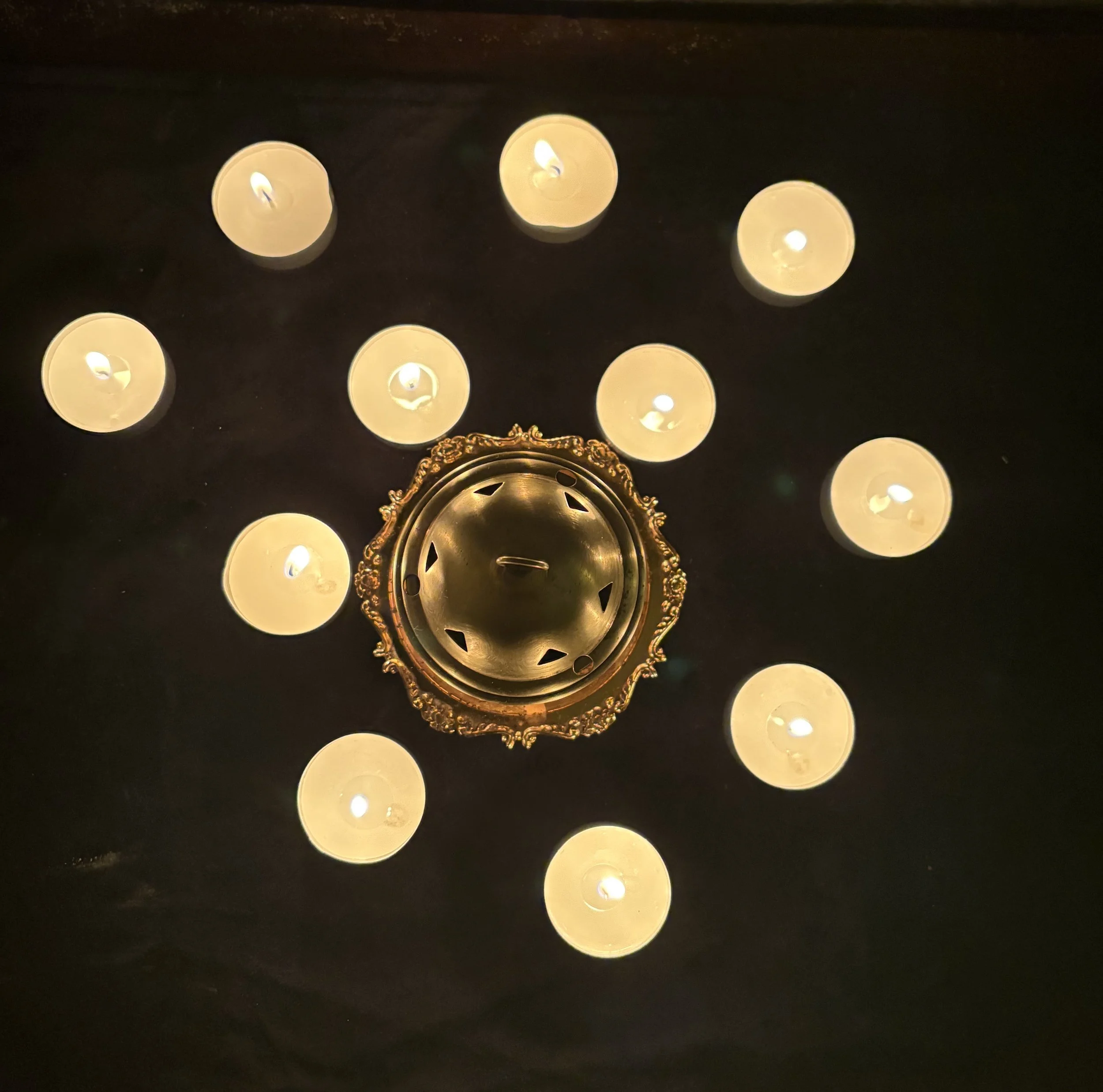
The Epinoiai are minor festivities, celebrated individually throughout the liturgical year. They recur monthly during the time of the dark Moon, and constitute a regular recall of the Udenerie, the feasts of the Pharmakon, from which they derive by analogy and by symbology.
Unlike the Dies Serpentis, which marks the self-givenness of God, the Epinoai serve to highlight the importance of each mystery of Creation and of its role in the state of Nothingness antecedent to Creation itself. In this sense, the Epinoiai belong to the same symbolic order as the Udenerie, yet represent their minor, regular, and non-liturgical articulation.
Each Epinoia is associated with the contemplation of the mystery of Creation. This mystery is neither explained nor commented upon, but simply contemplated. Such contemplation does not aim at any type of theoretical understanding, but rather at a true spiritual experience of that specific mystery. The Epinoiai are celebrated in a simple, individual and recollected form; they require silence, measure and presence, entailing no manifest festive prescriptions.
MMXXVI Celebrations:
Sunday, 18th January, Tuesday, 17th February, Thursday, 19th March, Friday, 17th April, Saturday, 16th May, Monday, 15th June, Tuesday, 14th July, Wednesday, 12th August, Friday, 11th September, Saturday, 10th October , Monday, 9th November