Didáskalia
How new Ophidians are forged.
OUR EDUCATION
The education within the Synodus is named Didaskàlia. It is a system structured on both academic studies and spiritual practice.
The Synodus has structured this system to provide the best possible education to all its members and the future administrative elite
All lessons are provided in English or with English subtitles, in digital form directly on this platform, through which students can also keep track of their progress, download textbooks and additional study material related to each lesson.
The study program is updated every year with new courses, materials and documents.
PRACTICAL EDUCATION
In addition to the academic education offered, each member has, depending on their grade, a list of seminars divided between mandatory and optional. Seminars are an essential part of one’s education, being able to provide practical case studies, communal exercises and new expertise for every member of the Synodus.
Mandatory seminars are organised by teachers in agreement with the student to help with participation and are always live.
Optional seminars must be requested by the interested students directly to the Administration of the Synodus.
Our Courses
-
Propedeutic to Liturgical Latin
Access position: Novice
Description: Fundamentals of essential liturgical grammar and vocabulary, ensuring the correct understanding and recitation of fundamental rites in Classical Latin.
-

Fundamentals of Ophidian Doctrine
Access position: Novice
Description: This course offers an effective overview of Ophidian doctrine, introducing the ideas of Pharmakon, God, Polemos, Neikos and Philia together with their philosophical premises.
-
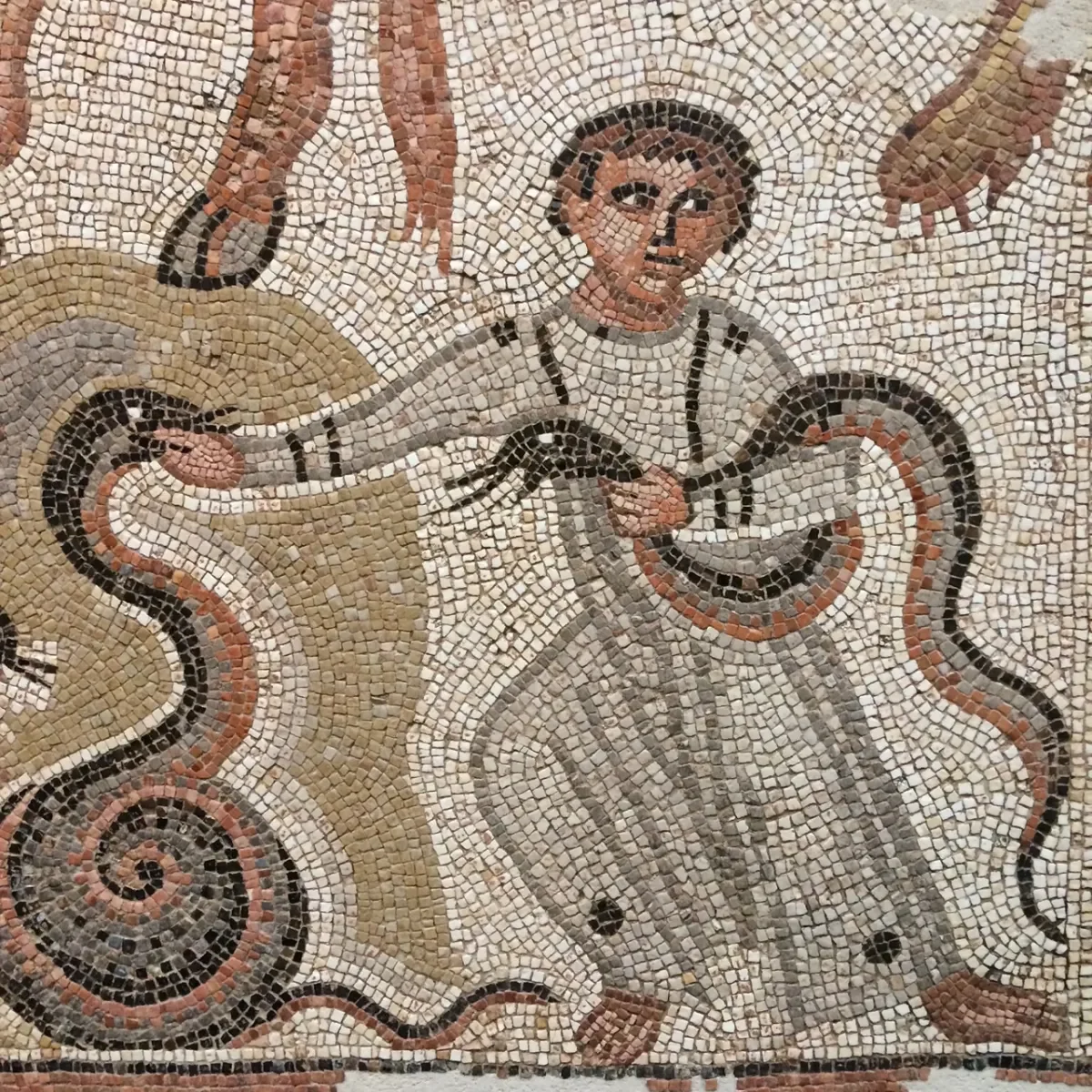
The Symbolism of the Serpent
Access position: Neokoros
Description: In-depth analysis of core theological concepts, including the nature of the Serpent, its autonomous manifestation, and the meaning of its symbology.
-
Introduction to Western Philosophy
Access position: Neokoros
Description: Historical overview of the birth, development and evolution of the main Western philosophical concepts and of their relationship with Ophididism and its practice.
-
Anthropology & History of rituals
Access position: Sacrists
Description: The course provides an anthropological and historical interpretation of ritual practices intended as a tool to better understand liturgy and its birth.
-
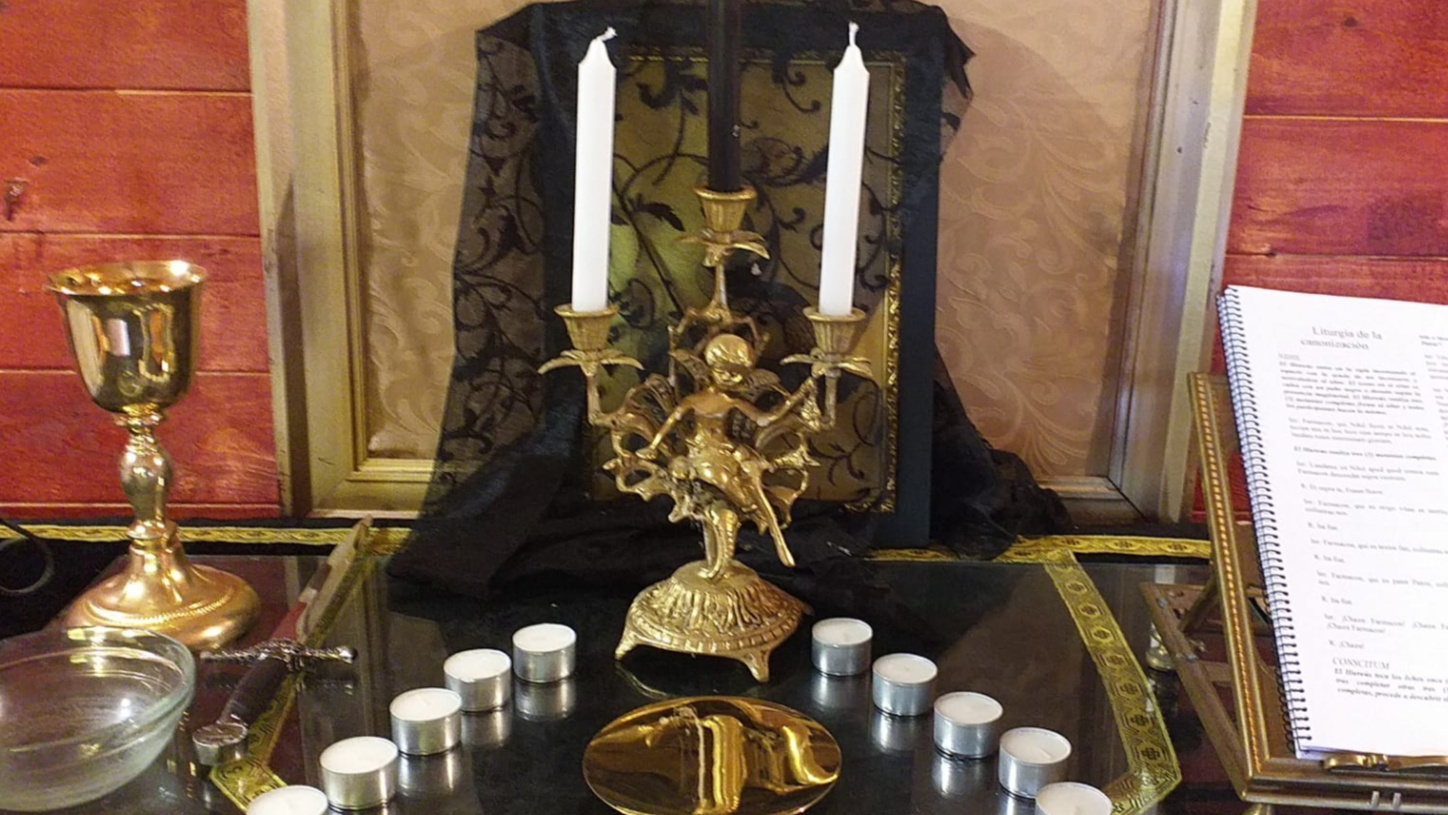
Ophidian liturgy: axioms & practice
Access position: Sacrists
Description: Through this practical course the student will learn the symbolism of the Ierà and will uncover the mysteries behind its celebration and practice.
-
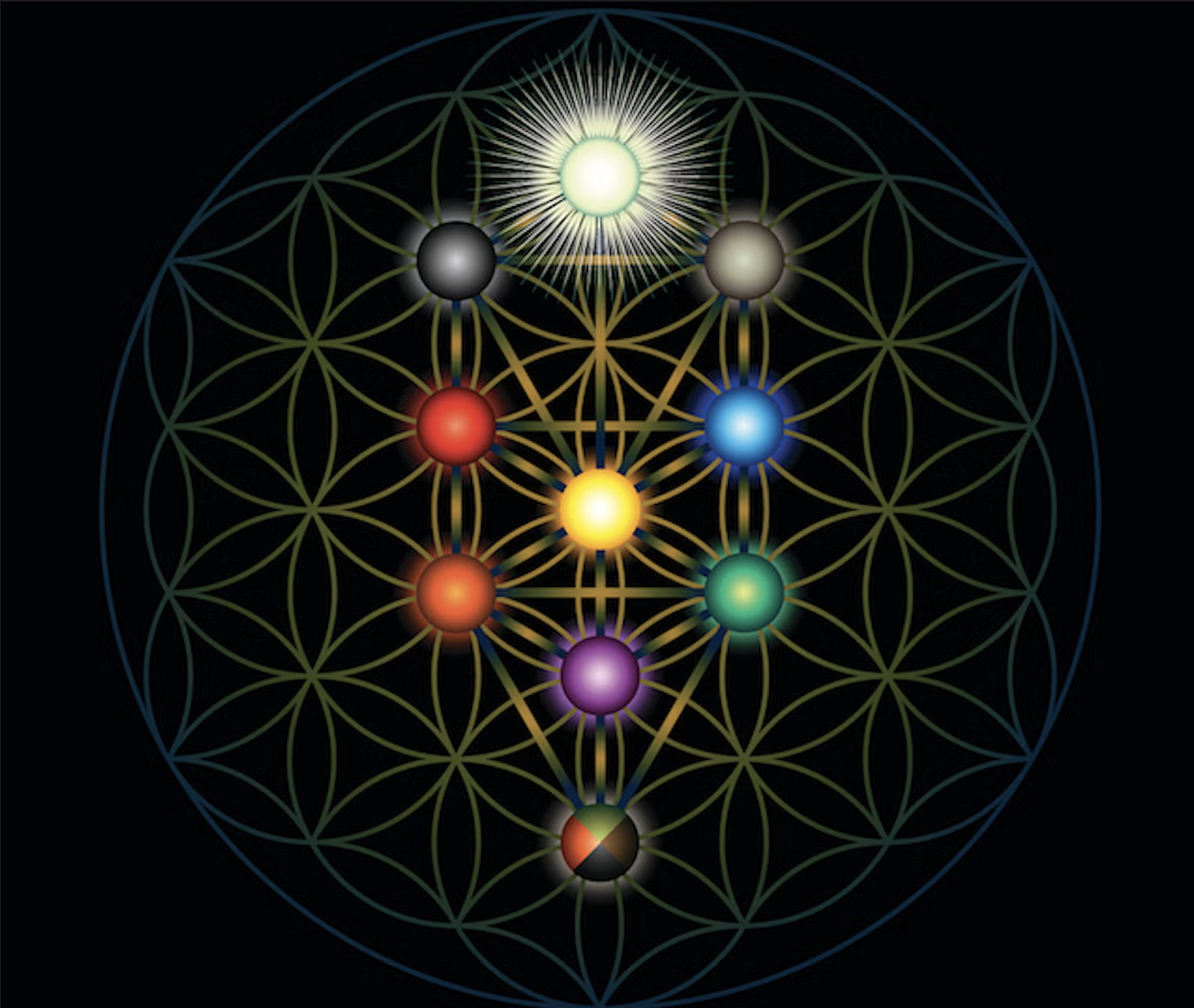
Kabbalistic concepts in Ophidism
Access position: Hierologos
Description: This course provides an in-depth analysis of the development of the most important kabbalistic concepts and their interrelation with Ophidian theology.
Our Seminars
-
Novices
All novices have access to the following live seminars:
Mandatory:
Living Ophidism: how to decline Ophidism in your everyday life and ethical behaviours before approaching more complex practices.
Introduction to liturgical practice: analysis of the main elements of euché and liturgy. How to correctly prepare to attend a celebration.
Living the Ophidian calendar: how to prepare yourself for festivities and celebrations. Analysis of individual and collective prescriptions for the members of the Synodus.
Optional:
Laboratory of liturgical Latin: pronunciation and translation exercises of classical Latin and Ophidian texts.
Foundations of Ophidian law: understanding the Statuta Synodi, the governing bodies of the Synodus and your rights as a member.
-
Neokoroi
All Neokoroi have access to the following live seminars:
Mandatory:
Explaining Ophidism: how to explain Ophidism to lay people without giving up on the philosophical meaning.
Apologetics: case studies of philosophical critiques on Ophidism: how to reject them and defend the tradition.
Fundamentals of personal care: first introduction to individual support: active listening, understanding the other and the limits of your role.
Speaking about Ophidism: how to behave when you represent the Synodus online or in person.
Optional:
Comparative Religions: understanding the cultural and religious background of new Ophidians.
Practical religious ethics: how to avoid dependent relationships with lay Ophidians; difference between religious assistance and professional expertise.
-

Sacrists
All Sacrists have access to the following live seminars:
Mandatory:
Dealing with death: how to support the family of a deceased Ophidian, celebrating the funeral and appropriate language.
Sufferings & crisis: how to support someone who suffers without offering solutions, but just real presence.
Illness, body and euthanasia: spiritual care of the ill person and the relationship between corporeal dignity, mortality and Ophidian doctrine.
Liturgical accident: how to handle a unforseen event during the celebration of a liturgy and preserve the ritual.
Optional:
Music & sounds in liturgy: understanding the use of the êchos and the chants in the liturgy.
Liturgical Latin II: complex exercises of translation from Latin to your mother tongue and viceversa.
-

Hierologoi
All Hierologoi have access to the following live seminars:
Mandatory:
Organising a community: logistics, calendar, communications, welcoming new Ophidians and organising celebrations.
Ethical case studies: complex ethical dilemmas with practical case studies to solve according to Ophidian doctrine.
Advanced liturgies: how to celebrate more complex liturgies and how to adapt them to the needs of your community.
Handling conflicts: how to handle conflicts between members of your community and between you and other members of the Synodus.
Optional:
Latin composition: how to create new prayers and evaluate them according to the Ophidian canon.
Liturgical Latin II: complex exercises of translation from Latin to your mother tongue and viceversa.
Access Your Reserved Area



Becoming Exegete
After the canonisation as a Liturgist and at least two years of public service, each Liturgist can ask for access to the office of Exegete. The Liturgist’s request is evaluated due to their service, publications and academic commitment.
After the acceptance of the request, the Liturgist is asked to deepen their academic studies through a compendium of readings. This is not a formal course, but a path of individual study. The suggested texts cover the areas of philosophy, history, theology and practical ethics, serving as the necessary intellectual foundation for the research dissertation required for accessing the office.
The disseration is evaluated by a committee of Exegetes or directly by the administration.
-
Aristotle, De anima
St. Thomas Aquinas, Compedium Theologiae
St. Augustine, Confessions
J. Marenbon, Boethius (Great medieval thinkers)
B. Davies & B. Leftow, The Cambridge Companion to Anselm
Boethius, On the Supreme Good: On the Eternity of the World ; On Dreams
I. Kant, Foundation of the metaphysics of morals
I. Kant, Metaphysics of morals
G.W.F. Hegel, Fenomenology of the Spirit
F. Nietzeche, Der Wille zur Macht (the will of power)
M. Heidegger, Being and Time
-
A. Zhok, Libertà e Natura
P. Singer, Famine, Affluence and morality
P. Singer, the Expanding universe
P. Singer, Animal Liberation
P. Singer, Practical Ethics
J.M. Coetzee, The lives of animals
-
J. Cammpbell, Creative Mythology: the masks of God
J. Guitton, Dieu et la science (God and the science)
M. Bettini, In praise of polytheism
A.C. Bouquet, A short history of religions
F. Prescendi, Religions antiques: une introduction comparée
P. Meinhold, Handbook of Religions
Hesiod, Theogony
J. P. Vernant, Myth and thought among the Greeks
G. Pironti & C. Bonnet, The gods in Homer
W. Halbfass, Karma and rebirth in classical Indian tradition
G. Flood, Induism
-
R. Hertz, The pre-eminence of the right hand : a study on religious polarity
R. Otto, The idea of the holy
R. Caillois, Man and the sacred
F. Remotti, Contro Natura: una lettera al papa
C. Calame, Humans and their environment
T. Ingold, Ecology of culture
L. Wittgenstein, Notes on the Golden Bough
C. L. Strauss, Myth and meaning
M. Gluckman, Analysis of a social situation in modern Zululand
P. Descola, Beyond Nature and Culture
-
In addition to a good level of English (C1), the candidate must demonstrate a good level of one (or more) of the following languages.
Italian (B2)
French (B2)
German (B2)
Brazilian Portuguese (B2)
Spanish (B2)
The candidate must also undertake an examination in one of the following ancient languages. The level required is basic.
Classical Latin
Classical Greek
Biblical Hebrew
Sine timore me tibi offero, et spiribus tuis indulgeo.
-De Orationibus Serpentis