OUR INSTITUTION
The Synodus is not merely a body of ideas.
It is a living religious institution.
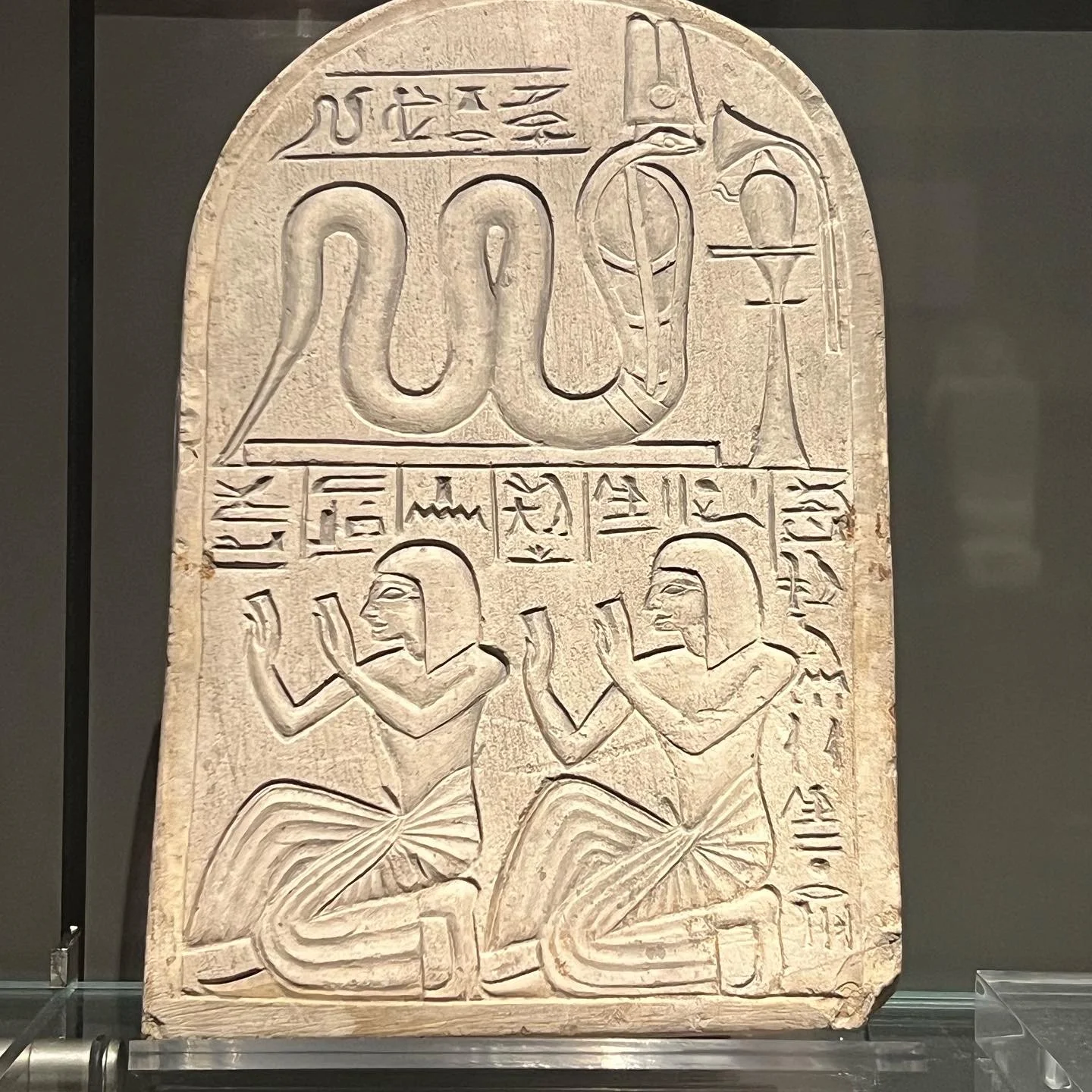
OUR HISTORY
The Ophidian Synodus, often referred to as “The Synodus”, is the only international institution for the study and the dissemination of the Ophidian faith.
Our project was born from a reflection on the role of classical knowledge in contemporary society and from the conviction that the principles of human formation, wisdom, and cultural transmission remain essential today. It is from this reflection that our founders have tried to develop a holistic spirituality, keeping an eye on academic research and philosophical speculation.
Being unsatisfied with the contemporary proposals about spirituality, our project took the shape of a true institution, The Synodus, in the year MMXXV.
Since its foundation, the Synodus has developed its activities through research, publications, educational initiatives, and cultural communication to create a lasting contribution to the preservation and renewal of classical thought within the newborn Ophidian framework.
Nemo sibi soli nascitur.
- Cicero
Internal Structure
Our Institution is characterised by a system of degrees through which every member can unfold their own personal spiritual journey.
Although we strongly believe that every member is an individual seeker, we also believe that an Institution, in order to function properly, must preserve a system of rights and duties through which every member is bound to the community and vice versa.
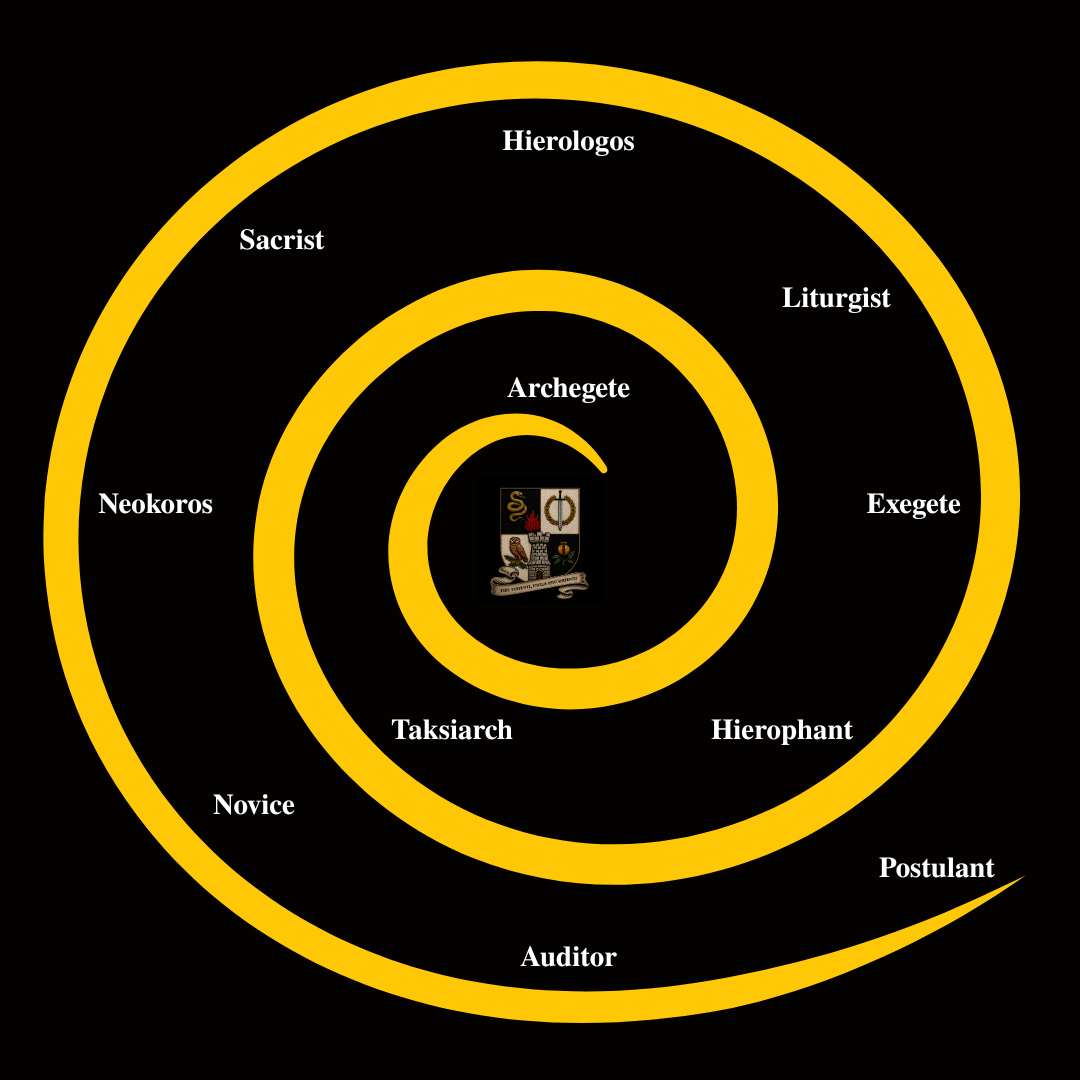
-
A Postulant is any person interested in applying to our Institution. After the application, every applicant remains as a postulant for a month as a preliminary discernment phase.
During this phase, they cannot participate in our activities, nor enter our digital space. This phase is essential because it is aimed at moving inwardly into oneself in order to listen to one’s spiritual need. Only after this first phase of discernment can a postulant renew their interest in accessing the Synodus.
-
After the first discernment, every applicant is invited as an auditor to all the activities of the Synodus for a time frame between one and three months, as another phase of their spiritual discernment. During this period, they can attend all the activities of our Institution and start approaching our educational system, meeting other members, and playing an active role within our community, without, however, holding any official position and voting in our assemblies.
-
After the second discernment, an Auditor, coherently to their own spiritual decision, can access the rank of Novice. For the very first time, they will be considered as a regular member of the Synodus. The Novitiate is a fundamental timeframe of one’s spiritual path, for it gives the necessary space to prepare for the first sacred vow, which is taken right after this first period of studies. In addition to the spiritual preparation for this apical moment, the Novice also follows a first course in our Didaskàlia, studying a propedeutic to Liturgical Latin.
-
The Neokoros is the “warden of the sacred place”. After the Novitiate, which ends following the request of the Novice and after positive evaluation of the Administration, the Novice becomes a Neokoros. This period combines the study of Ophidian doctrine with the the first approach to liturgical practice. During in-person liturgies, the Neokoros helps in the preparation of the sacred space, without having direct access to the altar. In case of online celebrations they help with the setting of the hosting platform, the settings on microphone and webcams and all technical things related to the celebration. The Neokoros must serve with a single liturgist (or above) for at least three (3) months up to six (6) months in addition to the regular education in the Didaskàlia.
-
After their service as Neokoros, their tutor can accept a member as a Sacrist. In this phase, which lasts from a minimum of six (6) months to a maximum of one (1) year, they will be in charge of cleaning and manipulate the objects on the altar, actively helping the Liturgist during the celebrations. In case of online liturgies, they will be in charge of giving instructions to participants, monitoring their behaviour during the celebrations and reading the responses of the liturgy (if necessary). During this period, the Sacrist must also focus their studies on the axioms of the ophidian liturgy, having a theoretical preparation for its celebration. The promotion from Sacrist to Hiereologos is suggested, again, by the Liturgist working on their education.
-
The Hierologos is the final stage of liturgical education for the student who has mastered the symbolism of the Canonic Ierà, being able to focus their studies on the festive liturgies and on alternative celebrations (weddings, funerary rites, canonisations). The Hierologos not only study them, but unifies the functions of the Neokoros and the Sacrist for all the advanced liturgies. Together with the practical service, they take the proper course and prepare for the final examination, which can be requested after eleven (11) months of active service and tutorship.
After the examination, the Hierologos goes through the proper canonisation ritual, becoming, finally, a Liturgist.
-
The Liturgist is the celebrant of Ophidian liturgies. They can celebrate all the fundamental celebrations (Canonic Ierà, Festive Liturgies, Weddings and Funerary Rites) being in charge of their own Ophidian community. A Liturgist enjoys a certain amount of autonomy, being responsible for the dissemination and development of Ophidian doctrine among their own community.
They can prepare for the examination as Exegete, if they are willing to do so.
-
The Exegete is a proper interpreter of doctrine. The Exegete is responsible for official interpretation, commentary, and resolution of doctrinal disputes, ensuring the intellectual integrity of the Ophidian knowledge. Any Liturgist who, in addition to their liturgical service, has contributed to the philosophical dissemination of Ophidism can request access to the office of the Exegete.
The admission fully depends on the administration, considering their publications, contributions and academic merits.
-
The Hierophant is the master of ophidian practice and philosophy. They have shown themselves capable not only to conduct the more complex liturgies and to actively contribute in the academic dissemination of Ophidism, but they have also proved to have great organisational skills.
For this reason, the Hierophant is in charge of several Liturgists, contributing to the organisation of bigger liturgies and events on their territory.
-
The Taksiarch is responsible for the structural organisation and discipline of the Synodus on a broad, strategic level, translating the spiritual mandate into actionable, disciplined conduct across all communities. Eleven Taksiarchs can be nominated by the Archegete as Nomarchs, acquiring authority over a big territorial circumscription and all its members, to provide liturgical service, effective charitable actions and spiritual counselling to all Ophidians.
Nomarchs also have a position in the Private Council of the Archegete, participating in ordinary and extraordinary administration.
-
The Archegete is the supreme leader of Ophidism on a spiritual and administrative level. He/She has power all over the Synodus, working together with other administrative offices and their Private Council to administrate the Synodus worldwide. The Archegete is elected by the Taksiarch among them and holds office for life.