UPCOMING EVENTS
Official Events & Ventures by the Ophidian Synodus
Lectures
-
![]()
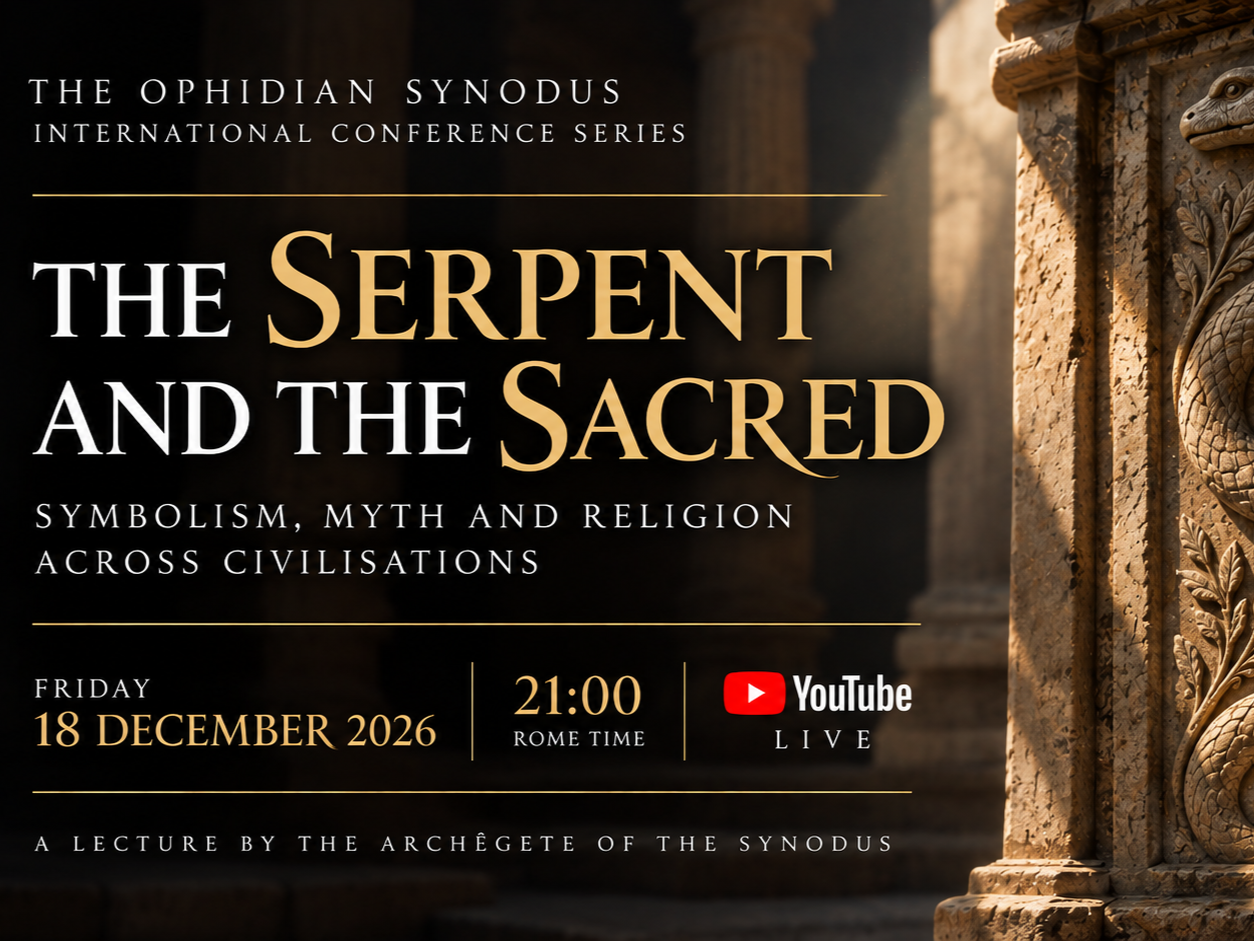
The Serpent and the Sacred: Symbolism, Myth and Religion across Civilisations
Friday, 18 December 2026 | 21:00 CET (Rome) | YouTube Live
Across the history of human civilisation, the serpent has occupied a remarkable place in religious imagination. Revered as a symbol of wisdom, healing and renewal, yet also associated with danger, chaos and death, it has appeared in myths, rituals and sacred traditions throughout the world.Why has this creature inspired such profoundly different interpretations? What can its recurring presence reveal about humanity's relationship with the sacred?
In this international conference, the Archēgete of the Ophidian Synodus explores the religious symbolism of the serpent through a historical and comparative approach.
Drawing upon traditions from ancient Egypt, Mesopotamia, Greece, India and beyond, the lecture examines the serpent's changing meanings and its enduring significance in the history of religions.
-
![]()
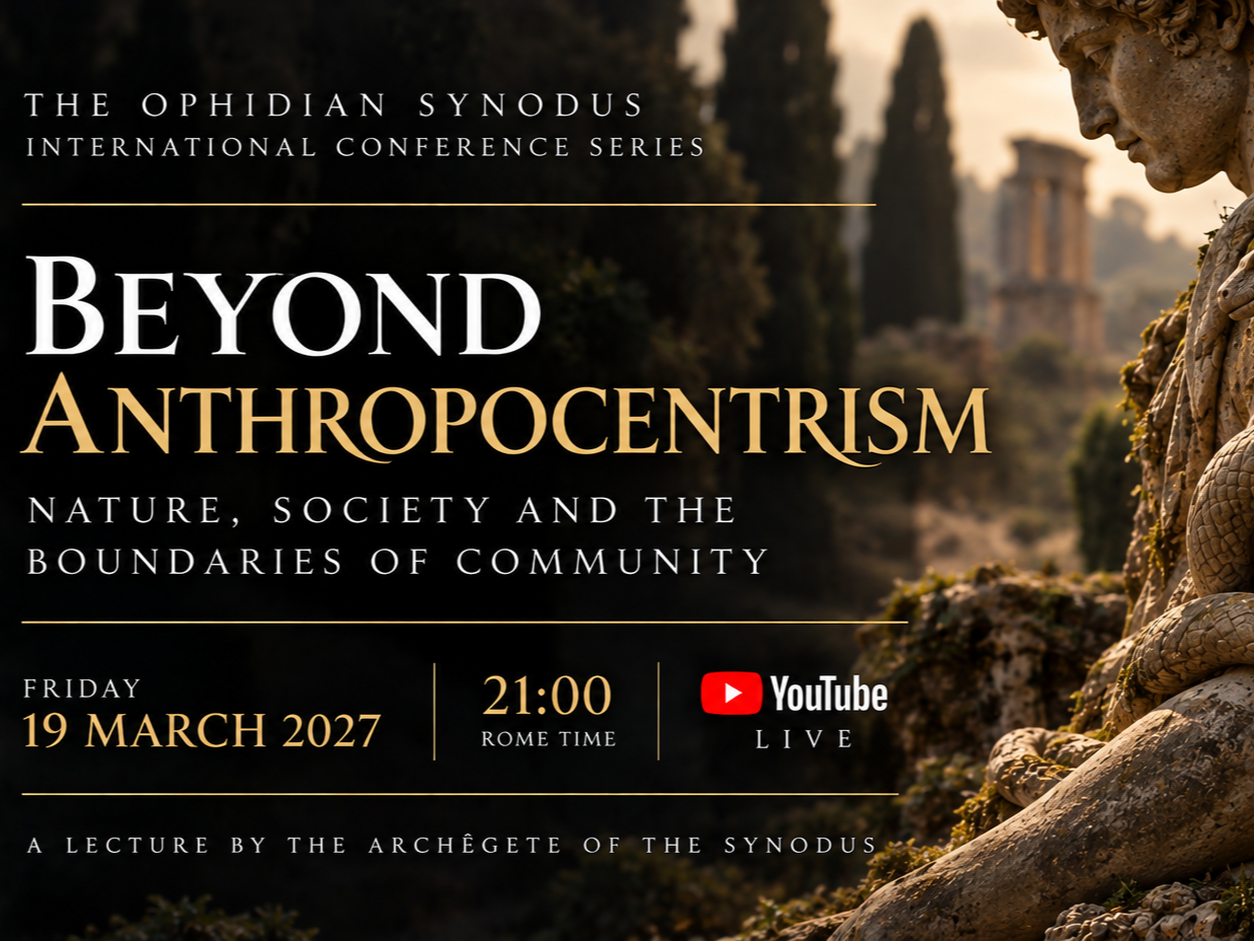
Beyond Anthropocentrism: Nature, Society and the Boundaries of Community
Friday, 19 March 2027 | 21:00 CET (Rome) | YouTube Live
Throughout the history of Western philosophy, the human being has frequently occupied a privileged position within conceptions of society, morality and the natural world.
From Aristotle's understanding of political community to the social contract theories of Hobbes, Locke and Rousseau, philosophical reflection has traditionally approached society primarily as a human institution.
But must the boundaries of community necessarily coincide with those of humanity?
Can moral responsibility extend beyond our own species? And what happens when we reconsider the relationship between human beings, animals and the natural environment?
In this international conference, the Archēgete of the Ophidian Synodus examines the philosophical foundations of anthropocentrism and explores the possibility of a broader conception of community.
Moving from classical political philosophy to contemporary environmental ethics and ecocritical perspectives, the lecture considers the implications of recognising humanity as part of a wider network of living relationships.
-
![]()
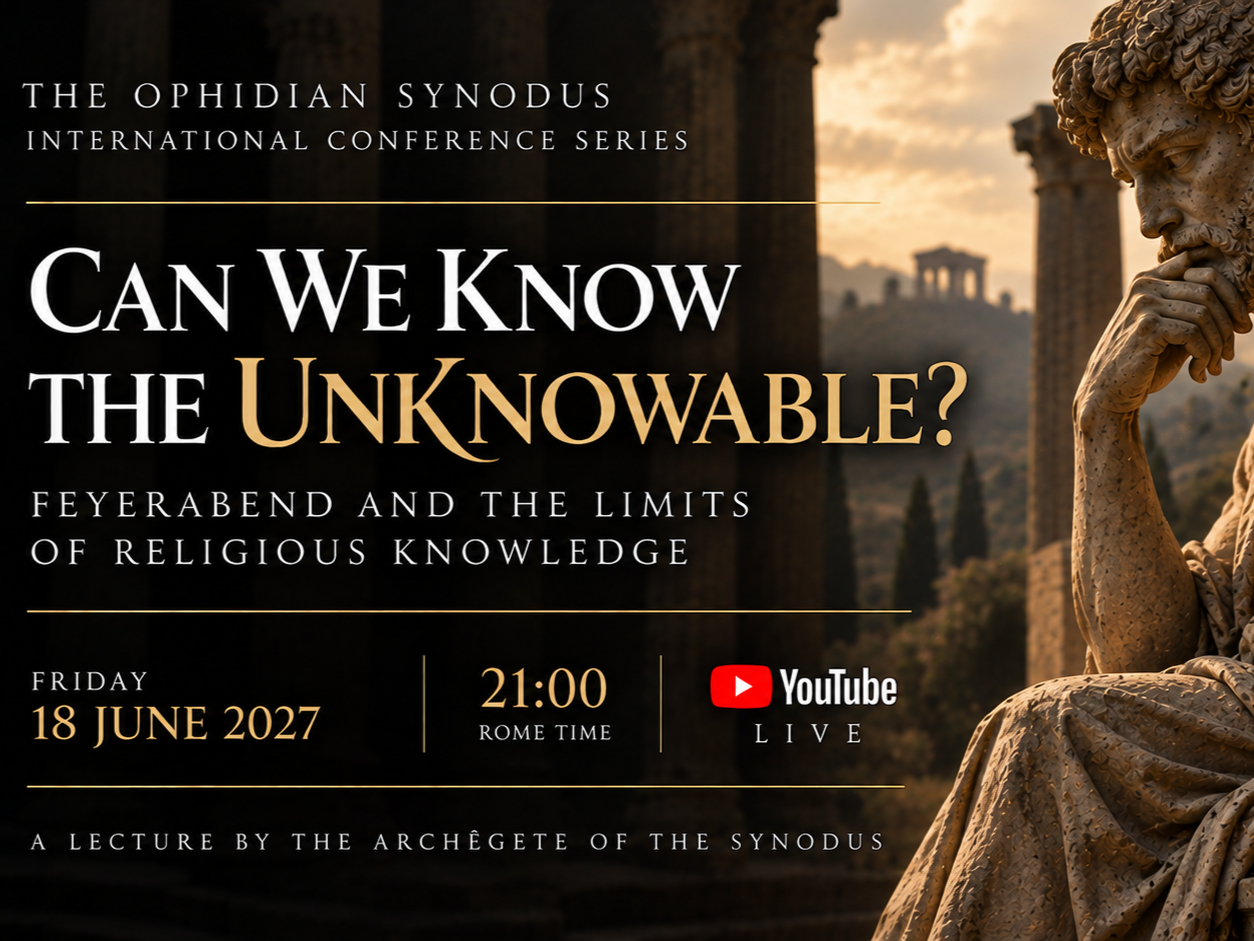
Can We Know the Unknowable? Feyerabend and the Limits of Religious Knowledge
Friday, 18 June 2027 | 21:00 CEST (Rome) | YouTube Live
Can the human mind truly comprehend the divine?
Throughout the history of philosophy and religion, thinkers have confronted the apparent contradiction between the desire to understand ultimate reality and the limitations of human knowledge.
Religious traditions have offered different responses to this problem, ranging from claims of divine revelation to the recognition that the ultimate nature of the sacred may transcend human understanding.
But if no single perspective can fully comprehend the divine, how should we approach the diversity of religious beliefs and experiences?
In this international conference, the Archēgete of the Ophidian Synodus explores the philosophical problem of religious knowledge through a critical engagement with the methodological pluralism of Paul Feyerabend.
Although Feyerabend developed his ideas primarily within the philosophy of science, his critique of rigid methodological rules raises important questions about the plurality of approaches through which human beings attempt to understand reality.
-
![]()
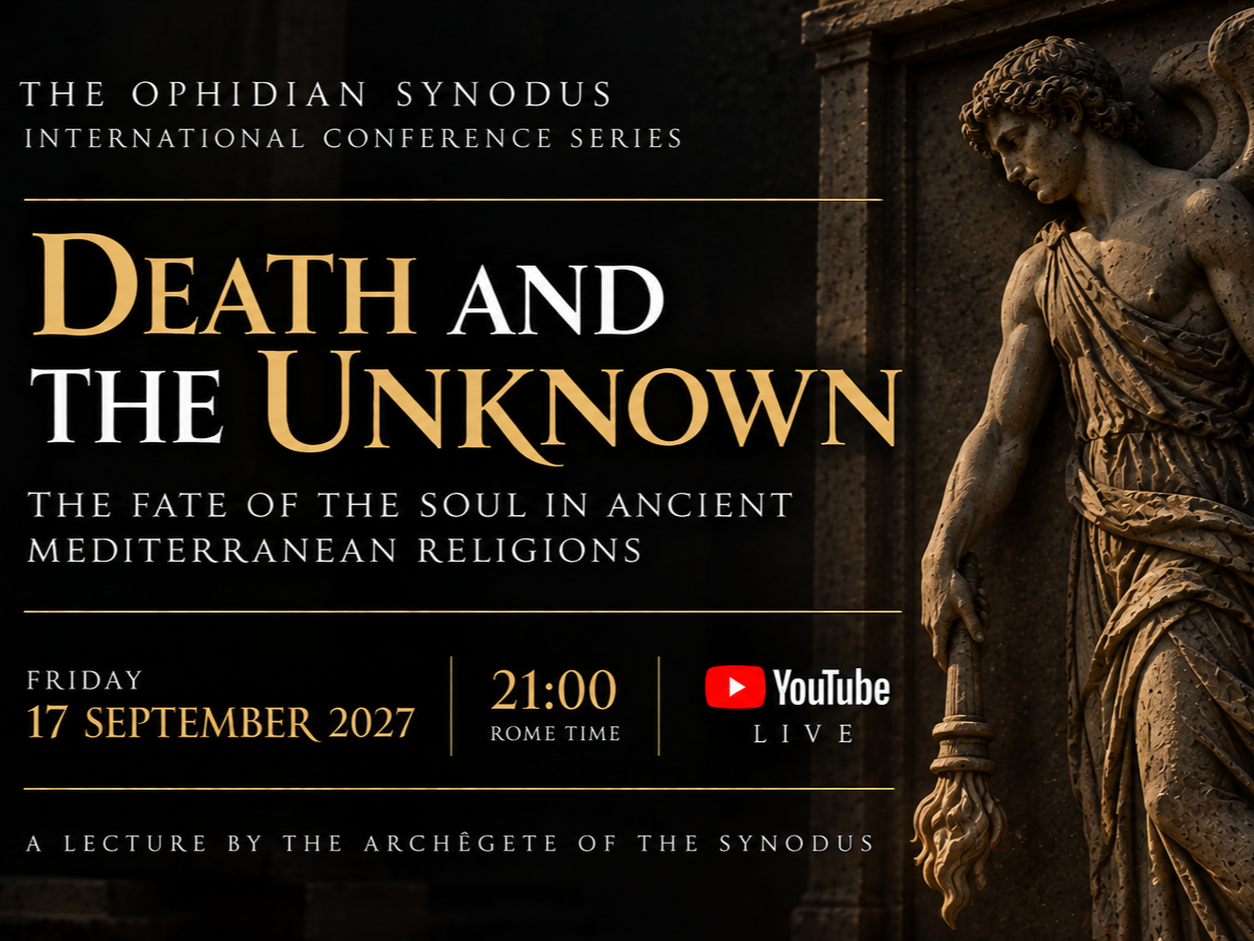
Death and the Unknown: The Fate of the Soul in Ancient Mediterranean Religions
Friday, 17 September 2027 | 21:00 CEST (Rome) | YouTube Live
What happens after death?
Few questions have accompanied humanity with such persistence, and few have inspired such a remarkable diversity of religious answers.
Across the ancient Mediterranean world, different civilisations developed complex beliefs concerning the soul, the afterlife and the relationship between mortality and the divine.
From Egyptian funerary traditions to Greek conceptions of Hades, from Orphic teachings to Jewish and early Christian eschatological thought, the fate of the individual beyond death became a central concern of religious imagination.
What did these traditions understand by the soul? How did they conceive its possible survival? And what can their differences reveal about the human confrontation with mortality?
In this international conference, the Archēgete of the Ophidian Synodus explores ancient Mediterranean conceptions of death and the afterlife through a historical and comparative perspective.