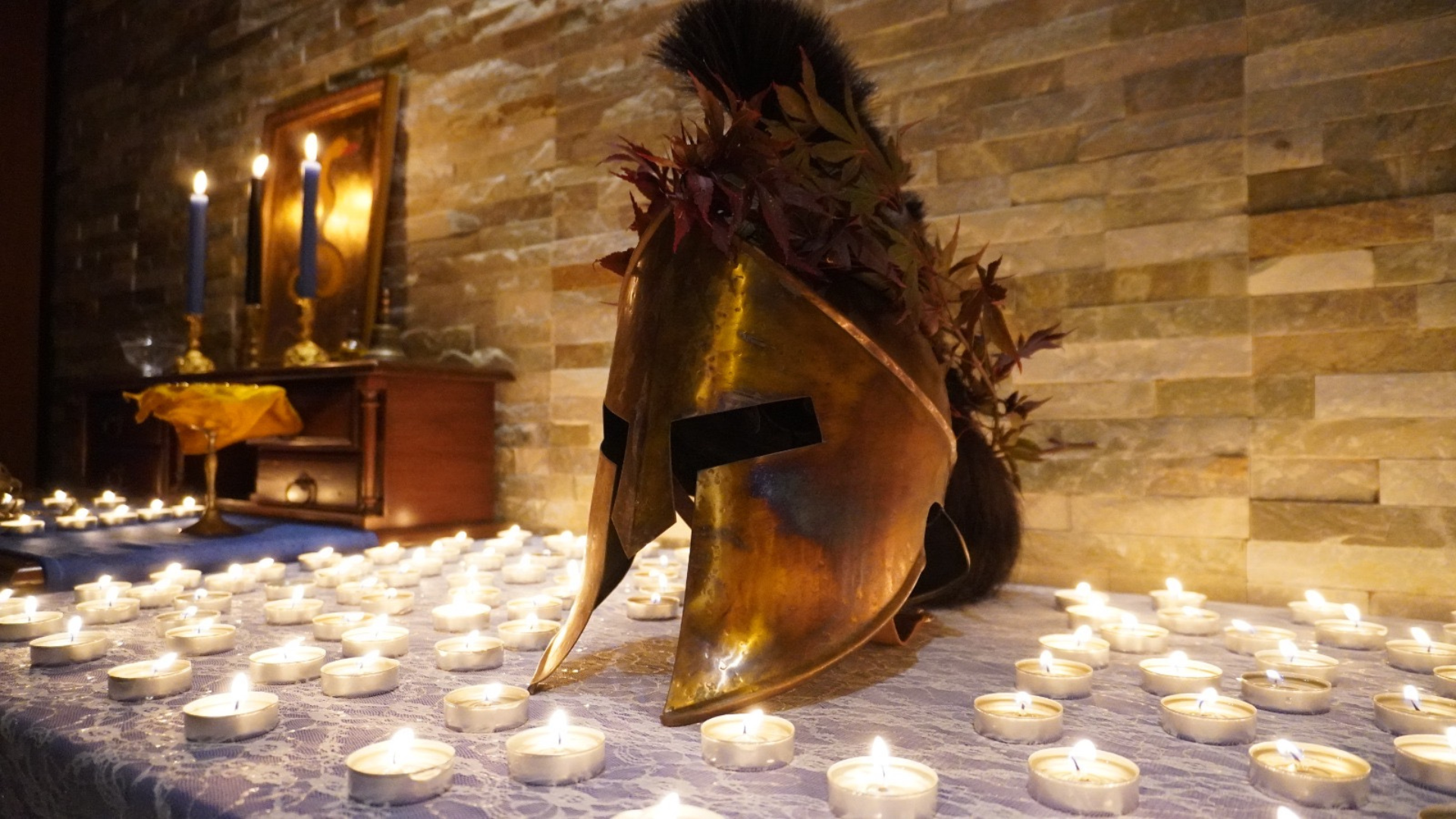
FESTIVALS AND RITUALS
The Liturgical Rhythm of the Ophidian Year
The liturgical life of Ophidism unfolds according to a rhythm that is neither linear nor repetitive, but spiralic. The festivals and rituals of the Ophidian year do not commemorate historical events nor celebrate human figures; they mark the points at which the Divine reveals Its movement—withdrawal, manifestation, rupture, and return.
Each celebration is a moment of encounter with the metamorphic presence of the Divine, a station along the spiral where the faithful pauses to contemplate the passage of the Principle through time and through the self.
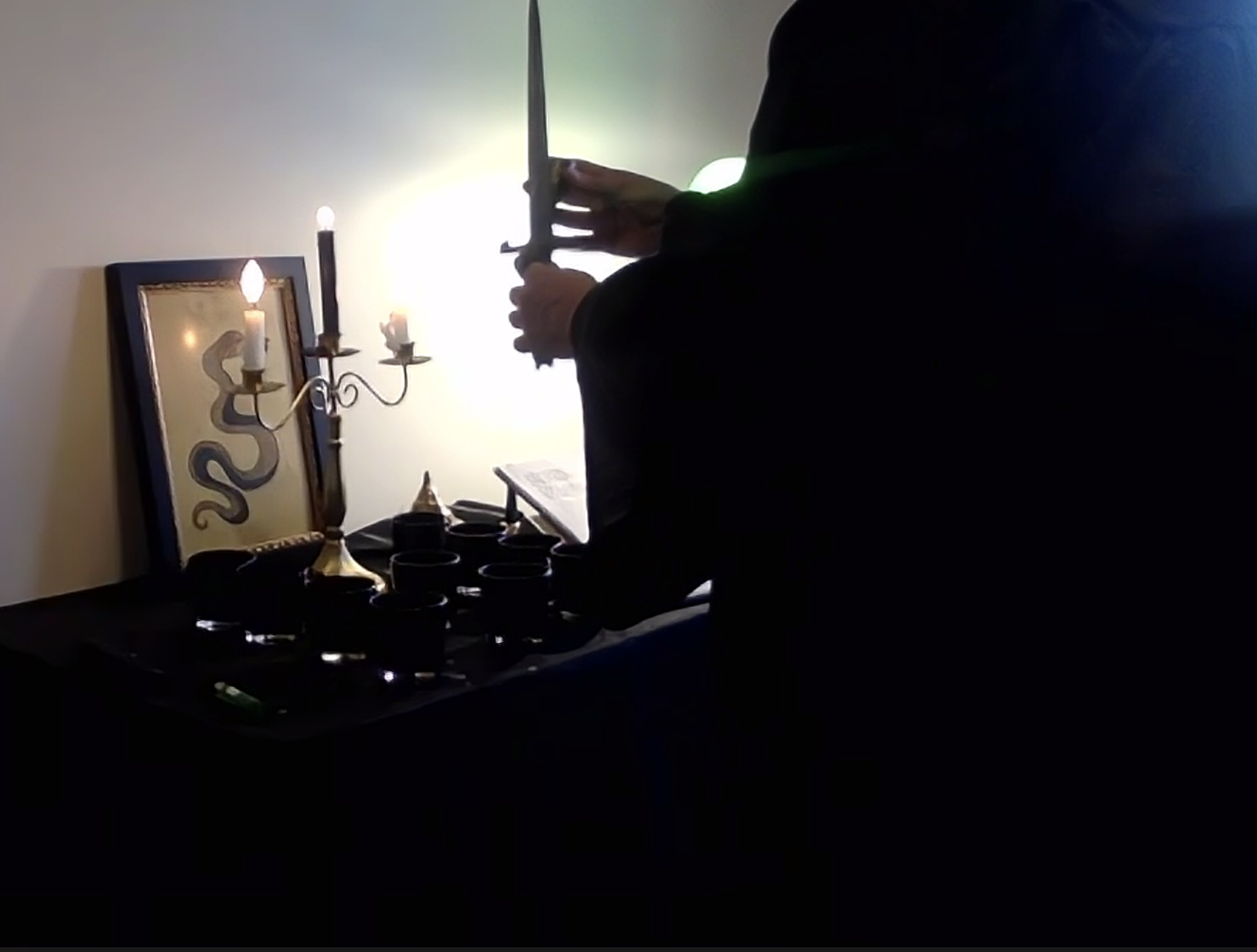
Ophidian festivals and rituals do not serve to commemorate the past; they open a space in which the faithful may encounter the Divine in Its present movement.
The Serpent reveals a God who acts through metamorphosis, and the liturgical year is the arena in which this metamorphosis becomes audible and visible.
To follow the Ophidian calendar is to enter the Divine rhythm—to learn the courage of shedding, the discipline of descent, and the clarity that accompanies renewal.
The Ophidian year includes several festivals, divided in major and minors. The majors festivities serve to build the skeleton of our liturgical year, while the minors help building its identity and shape. For each festivity the Synodus organizes celebrations, events and ventures according to its meaning and symbolism.
-
The Udenerie are the major feasts of the Farmacon and constitute the most solemn moments of the Ophidian liturgical year.
They are not celebrated through ritual action or spoken liturgy, but through a prolonged suspension of speech, gesture, and instruction, during which sacred time is entered through silence alone.Each Udenerie is observed by twelve consecutive hours of silence, from 11:00 AM to 11:00 PM.
This interval is not symbolic in a metaphorical sense, but structural: it establishes a complete arc of presence, during which no liturgical performance is enacted and no doctrinal content is transmitted.The Udenerie do not commemorate historical events, nor do they narrate mythical episodes. They are times of ontological exposure, in which the Farmacon is neither invoked nor represented, but endured as the ground of being, dissolution, and renewal.
Within the cycle of sacred time, the Udenerie function as absolute thresholds rather than as passages.
They do not accompany the flow of time, but arrest it, suspending ordinary rhythm and placing the community within a condition of radical attentiveness.
For this reason all minor festivities, including the Epinoiai, are ordered in reference to them and derive their measure by analogy.During the Udenerie, silence is not preparatory, nor contemplative in the didactic sense.
It is the sole form of observance.
No explanation is offered, no interpretation is required, and no interior exercise is prescribed.
What is demanded is presence without production and attention without discourse. -
The Ordo Invocationis is a structured liturgical order observed annually from 14 November to 14 December, during the period immediately preceding the Ofisie.
Throughout this interval, a liturgical invocation is performed every three days, according to a fixed and uninterrupted cadence.The Ordo Invocationis does not constitute a festive time, nor does it anticipate the manifestation of the Serpent in a symbolic or narrative manner.
It is a propedeutic order, established to dispose sacred time, space, and attention toward the forthcoming manifestation, without attempting to evoke or represent it.Each invocation within this ordo is liturgical in nature, yet restrained in form. It does not seek intensity, accumulation, or emotional ascent, but operates through regularity, repetition, and measured persistence.
The efficacy of the ordo lies not in variation, but in fidelity to rhythm.The Ordo Invocationis is neither contemplative silence nor full manifestation.
It occupies an intermediate condition: speech is permitted, but regulated; gesture is present, but reduced; intention is directed, but not resolved.
Through this sustained incompleteness, the ordo prepares the community to receive what cannot be produced by liturgical means alone.The invocations of the ordo do not summon the Serpent as an object of request. They establish instead a field of orientation, within which the community learns to remain exposed to the possibility of manifestation without presumption.
No individual invocation is sufficient in itself; only the integrity of the entire ordo bears theological weight.The Ordo Invocationis culminates on 14 December, at which point it ceases entirely. No invocation is carried forward into the Ofisie.
The manifestation of the Serpent is not a continuation of the ordo, but its radical interruption.
-
The Ofisie are the major feasts of the Serpent, observed annually from 20 to 22 December, and constitute the highest point of manifestation within the Ophidian liturgical year.
They are not days of preparation, nor of suspension, but days in which the Serpent is acknowledged as manifest within sacred time.The Ofisie follow the conclusion of the ordo Invocationis, yet they do not arise from it as an effect.
The ordo ceases entirely before the Ofisie begin.
What occurs during the Ofisie is not the culmination of liturgical effort, but its interruption: manifestation is not produced, but received.Unlike the Udenerie, which are marked by extended silence, the Ofisie admit liturgical articulation.
Word, sound, gesture, image, and communal presence are restored, not as instruments of control, but as responses to manifestation.
Liturgy during the Ofisie does not seek to invoke or compel; it bears witness to what has already entered time.Theologically, the Ofisie affirm the Serpent not as symbol or allegory, but as living principle of unity, transformation, and return.
They do not aim to narrate the Serpent, nor explain its nature.
They establish instead a time in which the Serpent may be encountered as manifest, without mediation and without reduction to discourse.The disposition required during the Ofisie is neither expectation nor endurance, but attentive reception.
What is celebrated is not excess, but presence. Not possession, but proximity.Within the economy of the sacred year, the Ofisie stand as the counterpart to the Udenerie.
Where the Udenerie suspend all action in silence, the Ofisie restore form without dissolving mystery.
Together, they articulate the two irreducible modes of Ophidian sacred time: absence and manifestation.The Ofisie conclude on 22 December, after which no residue of invocation or manifestation is prolonged.
Sacred time returns to its ordered rhythm, bearing the trace of what has appeared, without attempting to preserve or reproduce it.Color: Gold
-
The Disoterie do not celebrate emotion, affection, or moral sentiment. They affirm Philia as a cosmic and ontological principle: the force by which beings are drawn together, forms cohere, and multiplicity does not collapse into dispersion.
What is contemplated is not love as feeling, but love as structure of existence.Within the liturgical year, the Disoterie articulate a mode of sacred time distinct from both silence and manifestation.
They are neither suspensions, like the Udenerie, nor events of radical appearance, like the Ofisie.
They are days of stabilization, in which what has been given is allowed to remain, connect, and endure.Liturgically, the Disoterie admit articulated celebration. Word, gesture, and communal presence are ordered toward recognition and cohesion, rather than invocation or revelation.
The rites proper to the Disoterie emphasize continuity, shared time, and mutual presence, without dissolving the necessary reserve of mystery.The disposition required during the Disoterie is one of measured openness.
They call for availability rather than endurance, for attention rather than expectation.Theologically, the Disoterie stand in deliberate relation to the feasts dedicated to Neikos, celebrated in September.
They affirm that Creation is not sustained by tension alone, but also by aggregation; not by rupture alone, but by cohesion. Philia is not opposed to transformation, but makes transformation inhabitable.The Disoterie conclude on 22nd of March, after which sacred time resumes its ordinary rhythm.
What remains is not a trace of exaltation, but the reaffirmation of shared form, through which the community continues to exist as a gathered body within time. -
The Faidrerie, observed annually from 20 to 22 June, are the major feasts of knowledge and illumination.
They celebrate the light of understanding by which confusion is dispelled and forms are distinguished.The Faidrerie do not exalt information, learning, or accumulation of notions.
They affirm knowledge as illumination: the act through which what is obscure becomes ordered, what is dispersed becomes legible, and what is latent is brought into conscious alignment.
What is celebrated is not possession of truth, but clarity of orientation.Within the liturgical year, the Faidrerie mark a time of intellectual manifestation.
They stand apart from the silence of the Udenerie and from the ontological manifestation of the Serpent during the Ofisie.
Here, what becomes manifest is understanding itself, not as doctrine imposed, but as light that allows being to be seen without distortion.Liturgically, the Faidrerie admit articulated celebration ordered toward discernment.
Word, reading, and attentive listening are permitted and restored to their proper dignity, yet without didactic excess.
Speech during the Faidrerie does not instruct by accumulation, but clarifies by separation, allowing what is essential to emerge from what is confused.The disposition required during the Faidrerie is one of lucid attention.
They call for wakefulness rather than intensity, for discernment rather than enthusiasm.Theologically, the Faidrerie affirm that transcendence is not reached through obscurity or negation alone, but also through intelligibility.
Illumination does not abolish mystery; it renders it inhabitable without confusion.
Knowledge, in this sense, is not opposed to the sacred, but is one of its legitimate modes of access.The Faidrerie conclude on 22 June, after which sacred time resumes its ordinary rhythm.
What remains is not a residue of exaltation, but a clarified horizon, within which thought, action, and contemplation may proceed without disorientation. -
The Tanasimee, observed annually from 20 to 22 September, are the major celebrations of death and desegregation within the Ophidian liturgical year.
They mark a time in which dissolution is neither feared nor aestheticized, but acknowledged as a necessary and active principle within Creation.The Tanasimee do not commemorate mortality in a sentimental or commemorative sense.
They affirm Neikos as separation: the force by which forms are undone, attachments loosened, and false unities broken apart.
What is celebrated is not annihilation, but the clearing of excess, through which what is essential may endure.Within the cycle of sacred time, the Tanasimee constitute a moment of intentional descent.
They stand in deliberate contrast to the Disoterie and the Faidrerie: where Philia gathers and illumination clarifies, Neikos dismantle and strip away.
This festivities establish death not as an end, but as a discipline.The disposition required during the Tanasimee is one of vigilance and inner struggle.
They renew the Ophidian commitment to purification through discipline, knowledge, and ritual devotion, understood not as comfort, but as sustained effort against dispersion, inertia, and self-deception.
What is demanded is endurance, not consolation.Liturgically, the Tanasimee admit forms of observance marked by restraint, gravity, and measure.
Ritual action, where present, is sober and exacting. Speech is reduced, gesture is essential, and devotion is oriented toward vigilance rather than expression.The Tanasimee are explicitly days of preparation.
They orient the community toward the long winter of death, not as a season of despair, but as a time requiring attention, austerity, and perseverance.
They teach that survival within sacred time is not guaranteed by warmth or light alone, but by readiness to inhabit absence without disintegration.The Tanasimee conclude on 22 September. What follows is not resolution, but continuity: a time carried forward under the sign of vigilance, in which death remains present as a teacher rather than an adversary.
-
The Dies Mortuorum, observed annually on 31 October, is the solemn day dedicated to the commemoration of the dead within the Ophidian liturgical year.
It is neither a feast of mourning nor a celebration of the past, but a time of lucid remembrance, in which the dead are acknowledged as an enduring presence within the order of Creation.On this day, the Ophidian community commemorates those who have passed, not through lament or nostalgia, but through recognition of continuity. The dead are therefore not regarded as absent, but as having crossed into a different mode of existence, no longer subject to the limits of form, yet inseparable from the structure of existence itself.
The Dies Mortuorum does not individualize remembrance through sentiment or personal attachment.
Rather, it situates every deceased being within the universal condition of mortality, affirming death as the principle by which all forms are rendered finite and all identities provisional.
In remembering the dead, the living are reminded of their own measure.Within the cycle of sacred time, the Dies Mortuorum stands as a threshold of recollection.
It follows the Tanasimee and deepens their teaching, shifting the focus from inner struggle and discipline to memory and sober awareness.
It prepares the community to enter the extended time of vigilance and silence that precedes the Udeneries.The disposition required during the Dies Mortuorum is one of measured gravity and attentive respect.
Neither despair nor exaltation is appropriate. Remembrance is practiced without excess, allowing the presence of the dead to instruct the living in restraint, clarity, and endurance.Liturgically, the Dies Mortuorum admits restrained forms of observance.
Silence, reduced speech, and acts of commemoration are permitted, provided they do not become expressions of sentimentality or consolation.
What is sought is not comfort, but fidelity to memory.The Dies Mortuorum is not a day of fear. Death is neither invoked as an enemy nor revered as an idol.
It is acknowledged as a teacher of measure, through whom the living learn to inhabit time without illusion.The Dies Mortuorum concludes without resolution.
The remembrance of the dead is not confined to a single day, but carried forward as a discipline of memory, integrated into the life of the community and into the vigilance of the living. -
The Ordo Imminutionis is a preparatory order observed annually from 1 November to 11 November.
It is founded upon fasting and prayer and is established to prepare the Ophidian for the approach of the Udenerie, through deliberate diminution rather than accumulation.The Ordo Imminutionis does not seek purification through intensity or excess. It operates by reduction: the gradual withdrawal from superfluity, distraction, and self-assertion, so that what is essential may remain exposed.
Through fasting, the body is restrained; through prayer, attention is recollected.
Neither practice is pursued for ascetic display, but for ordered readiness.Within the liturgical year, the Ordo Imminutionis follows immediately upon the Dies Mortuorum and continues its work inwardly.
Where the Dies Mortuorum establishes remembrance and sober awareness, the Ordo Imminutionis translates memory into discipline, preparing the faithful to enter silence without resistance.Prayer during the Ordo Imminutionis is sober and measured. Its function is to maintain orientation and vigilance while the self is deliberately reduced.
What is sought is not elevation, but availability.Fasting during the Ordo Imminutionis, practiced daily from 11AM to 11PM, is likewise ordered and restrained.
It is not a rejection of the body, but a reassertion of measure, by which appetite is returned to its proper place and dependence is made visible.
Through hunger, the faithful learn endurance; through restraint, clarity.The Ordo Imminutionis is neither festive nor contemplative in the full sense. It is a disciplinary interval, marked by perseverance rather than insight, and by fidelity rather than experience.
Its efficacy does not lie in any single act, but in the integrity of the entire period.The Ordo Imminutionis concludes on 11 November, without transition or extension.
What follows is the entry into the Udenerie, where all action ceases and silence alone remains.
Thus, what has been diminished gives way to what can no longer be produced: the encounter with sacred absence. -
The Epinoiai are minor moments of sacred time, established as interior thresholds within the course of the liturgical year.
They recur on a monthly basis during the time of luminous absence, according to the commonly recognised astronomical reckoning, and constitute an ordinary recall of the Udenerie, the feasts of the Farmacon, from which they derive by analogy and by measure.The Epinoiai do not commemorate historical events, nor do they celebrate visible manifestations.
They mark the silent act by which time, stripped of manifest form, disposes itself anew toward thought and presence.
In this sense, the Epinoiai belong to the same symbolic order as the Udeneries, yet represent their minor, regular, and non-solemn articulation.Each Epinoia is associated with the contemplation of a Mystery of Creation (Mysterium Creationis).
This mystery is neither explained nor commented upon, but simply contemplated, as a form of thought that precedes discourse and as an interior act of conceiving meaning.
Such contemplation does not aim at conceptual understanding, but at the silent disposition of the mind and of attention.The Epinoia is neither discourse, nor explanation, nor revelation: it is the preliminary act of thinking, prior to form, word, or rite.
Within it, nothing is added to the world; rather, space is created so that what already is, may be inhabited anew.The Epinoiai are celebrated in a simple and recollected form.
They require silence, measure, and presence, and entail no manifest festive prescriptions.MMXXVI Celebrations:
Sunday, 18th January
Tuesday, 17th February
Thursday, 19th March
Friday, 17th April
Saturday, 16th May
Monday, 15th June
Tuesday, 14th July
Wednesday, 12th August
Friday, 11th September
Saturday, 10th October
Monday, 9th November
Wednesday 9th Decemeber
The Ophidian Liturgical Year

Dies Serpentis
The Weekly Celebration of the Serpent
The Dies Serpentis (Day of the Serpent) stands as the most sacred weekly observance within the Ophidian Community. It is not merely an act of devotion to the Divine , but an essential and joyful time of sharing for what Ophidism terms self-givenness , honoring the autonomous and selfless manifestation of the Serpent. This essential rite honors the profound silence of the Pharmakon and the intentional waiting for the divine event that has not yet taken place.
The celebration is addressed to all Ophidians, including consecrated members of the Synodus, lay people, and novices, and takes place every Saturday morning, before 11:11 AM. It is an hour dedicated to honoring the great mystery that is divine manifestation , beginning with profound preparations on the preceding Friday evening and culminating in concentrated silence and simple offering.
The entire rite culminates precisely at 11:11 AM, the symbolic weekly time of the Serpent’s self-givenness. At this exact moment, Ophidians celebrate the Manifestatio Dei (God’s self-givenness) with the festive sounding of the ritual bell or gong , the uncovering of the icon, and the singing of "O Pater Patris".
Official Indications for the Dies Serpentis
To fully understand the preparatory arrangements, the solemn prayer (Deus qui es et non es), the order of the candle lighting, and the procedural structure of the Day of the Serpent, we invite you to download the official indications from the Synodus.